In 2023 I invited Mandeep Dhadialla to work with me on a collaboration on the theme of care. We talked through a number of different ideas but soon settled on something Mandeep was keen to work on: the emotional impact of front gardens in the local area. She talked about how beneficial it had been to her to walk through her urban community and see flourishing front gardens, especially during lockdown. We started the project by walking in her suburban environment and in my own, comparing flourishing, mediocre and lost front gardens, where there were no plants left. The loss of gardens, the loss of biodiversity and joy that gardens bring, became my area of fascination and focus. I began reading about garden loss and the impacts on the environment by losing so many. In the UK, 5 million front gardens (one in three) have no plants at all. In 2013 one million home owners part-paved their front gardens. The impacts of this loss of green space is significant on our collective and individual wellbeing.

Make Gardens Green Again Banner
Thinking about front gardens and their loss prompted me to make a protest banner calling for re-wilding front gardens. Made from a vintage tablecloth with the poppies and wheat embroidery by another, unknown maker. Text added by me using appliqué and hand embroidery.

Garden Waste (Vintage textile, hand cut)
Much work I made for this collaboration focusses on garden loss in a literal way. I wanted to make something that represented the impact of loss, the fragmentation of green spaces into tiny pockets of prisoner plants. I initiallly planned to work in green fabrics but in the end decided to use floral fabrics, plant-prints and embroidery of flowers to represent gardens and plant life. In these hanging pieces, I used floral prints and cut away the flowers, symbolising loss and removal. In the red piece, the flower motifs are whole at the top and gradually vanish as I cut away more and more. I have displayed this with the fragments alongside.
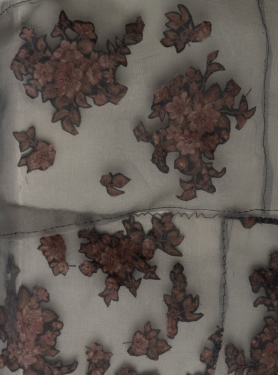
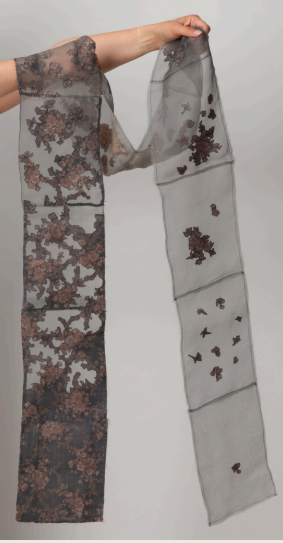
Species Decline
I have used the same floral print cotton in each section, removing more and more until we are left with one flower. This represents the spread of concrete over gardens, over time. Cotton and silk fabrics, hand stitching and hand cutting
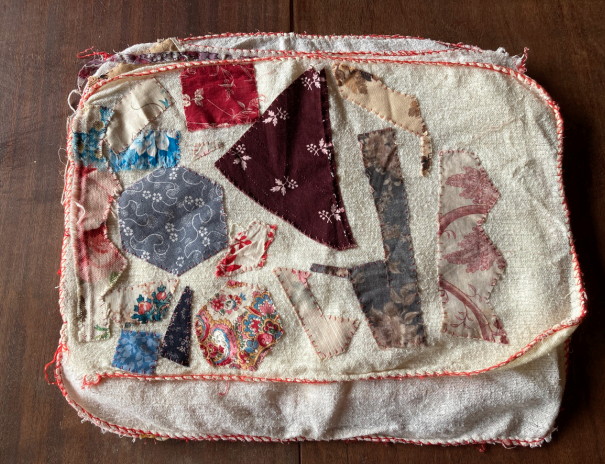
Flowers in the Dust
The dusters reminded me of the little plots we have our homes on, fenced in by boundaries and each with its own fragments of garden, of plant life and nature. Each piece is made from tiny snippets of floral fabrics as found in my stash, mostly left from making patchwork. These tiny shapes are like isolated garden beds of plants, hemmed in and surrounded by buildings and concrete in urban areas.
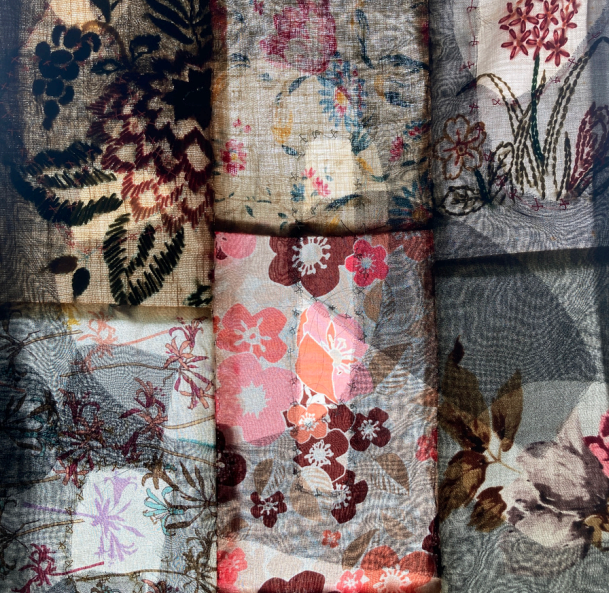
Remains
Also on front cover and inside front cover. I collected all my floral and plant-patterned fabrics and made a patchwork of them, a paving pattern of brick shapes. The black silk organza overlays represent the layers of concrete and building material covering so many former gardens. Just small patches of plants remain visible and abundant. In this photo the piece has light behind. In the other photos there is less transparency and the black appears solid.

Ghost Leaves
These pieces are made from leaves collected in special places, preserved as specimens in layers of silk netting. I chose damaged and decaying leaves, which I find beautiful and meaningful. The technique is based on Victorian pressed fern decorations.
My contribution focussed on developing my work about front gardens, exploring the impact of lost and or flourishing front gardens on the environment, personal and community wellbeing. This project was borne out of lockdown through daily walks on one particular route in my neighbourhood, taken multiple times over two years.
In that time, I have seen significant changes as vibrant, flourishing front gardens become grey, concrete graveyards. I saw a glorious magnolia tree that brightened my days for many years come down in a blink of an eye. More and more cars on slabbed front gardens have become the new mechanical wildlife. Yet, I have also seen one front garden become a flower and vegetable plot with raised beds, weeds being left to thrive, more manageable plant pots proudly on display. However, my neighbourhood was, and still continues, to change drastically with a fast turnaround of convenience over nature – the essence of “mutualism” between human and plant connection losing its way to a more insular community enveloped behind the safety of an ever-evolving urban jungle.
Through collaborative research, Ruth and I exchanged thoughts, conversations, and encountered our own pathways to creating something meaningful from our shared and solo experiences of observational walks, contributing to shifts in thinking and creative processes.
By having an open brief, the flow of slow thinking, slow working, slow creating, lent itself to witnessing the slow seasonal and non-seasonal changes to front gardens over the course of nearly a year. This is in contrast to the quick human-inflicted impact on front gardens both directly and immediately, on the environment, personal and community wellbeing.
Front Gardens is an ongoing theme to my overarching long term project of Plants & Place. As I continue working on developing this work, I’m looking into re-wilding my own front garden, and thinking about how I can work with my local neighbourhood to return to community, a sense of place – connecting through the idea of mutualism with our environment and human to human. The artworks I produced are my emotional response to disappearing front gardens told through combined layers of printmaking, textiles, translucent papers, and colour.

Nature Resilience
This multi-layered piece observes closely what lies beneath concrete and paved front gardens. It is a piece that reflects the resilience of nature and how nature always finds a way to flourish through the cracks.

Lost Front Gardens
A print and textile multi-layered piece which highlights the significant impact the loss of a front garden has on environmental and human wellbeing through the use of negative space and a limited colour palette.

The Disappearing Environment
This multi-layered piece is an emotional response to observing a local front garden disappear over a period of time and how that sense of outer physical loss impacts on our inner landscape. The front garden become less vibrant, gradually disappearing as the underlying layers are revealed, and eventually gives way to paving slabs.
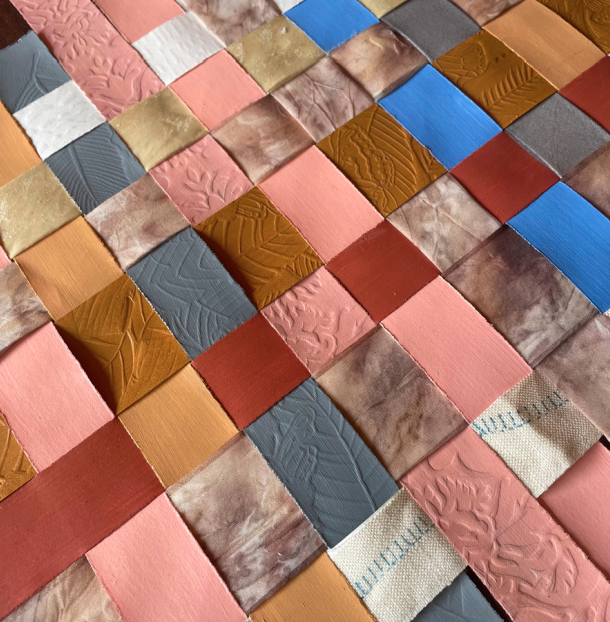
The Invisible Front Garden
A printed paper and textiles piece about lost gardens that have been replaced with paving slabs. The blind emboss represents the colours of lost gardens and wildlife that lie below the paving. The weave indicates how modern life has taken precedence over the natural environment, yet bringing attention to the fact that one can still flourish alongside the other as a front garden.
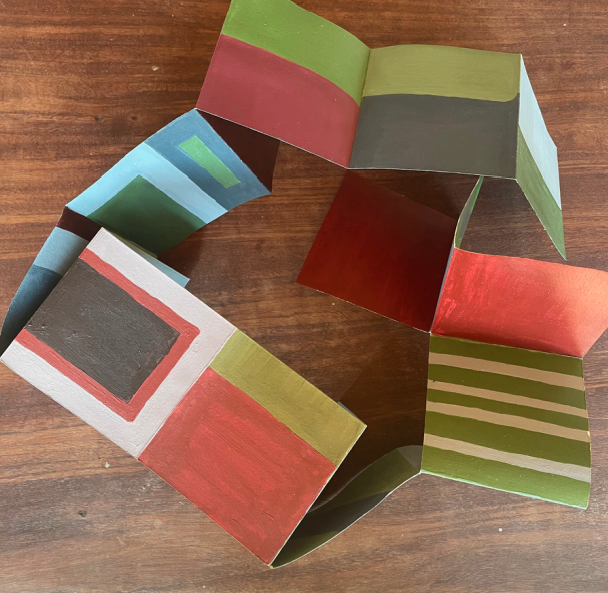
Urban Front Gardens
A visual data collection book which records the number of flourishing and lost front gardens in my local urban neighbourhood in Leicester. The green colour blocks represent the number of flourishing gardens, wild “weed”-filled gardens, to red paved or grey concreted lost front gardens on my regular walking route from my doorstep.

 Ruth Singer