Reflections on my year-long visiting artist residency with Peace of Green CIC’s Wellness in Nature Group.
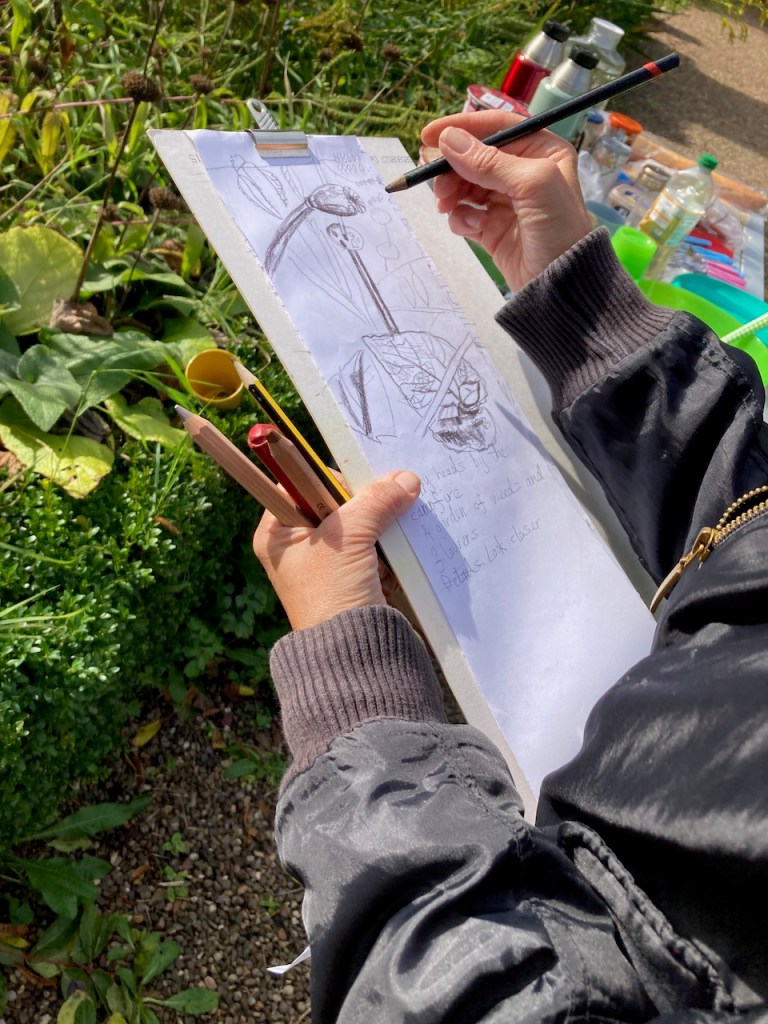
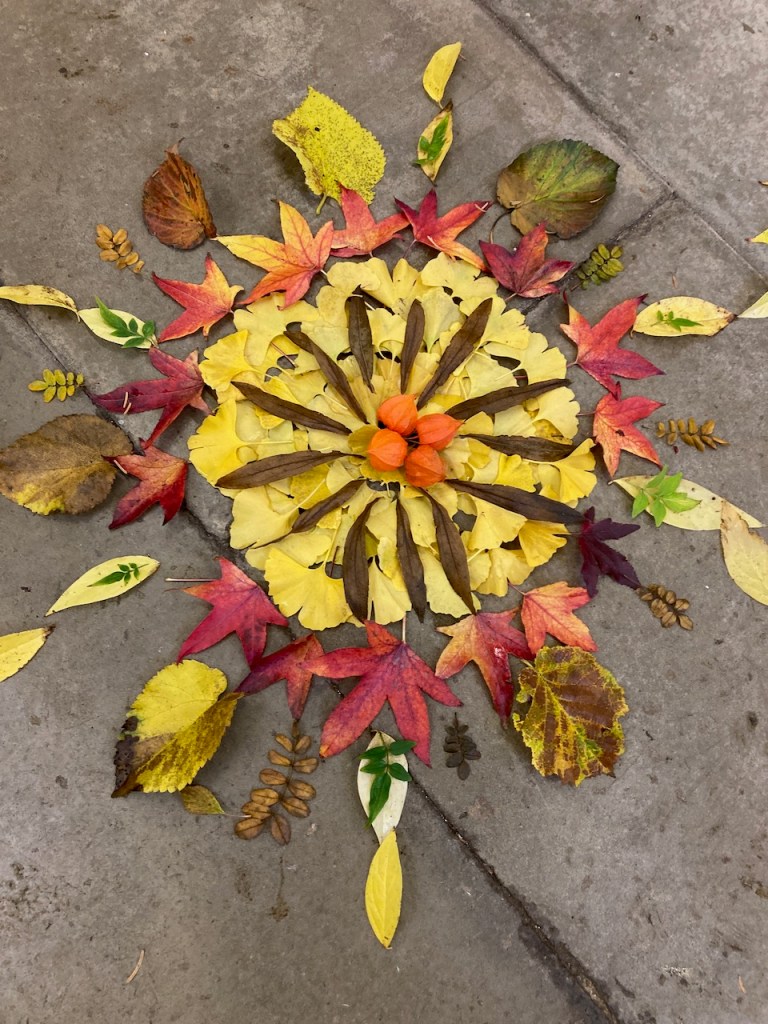
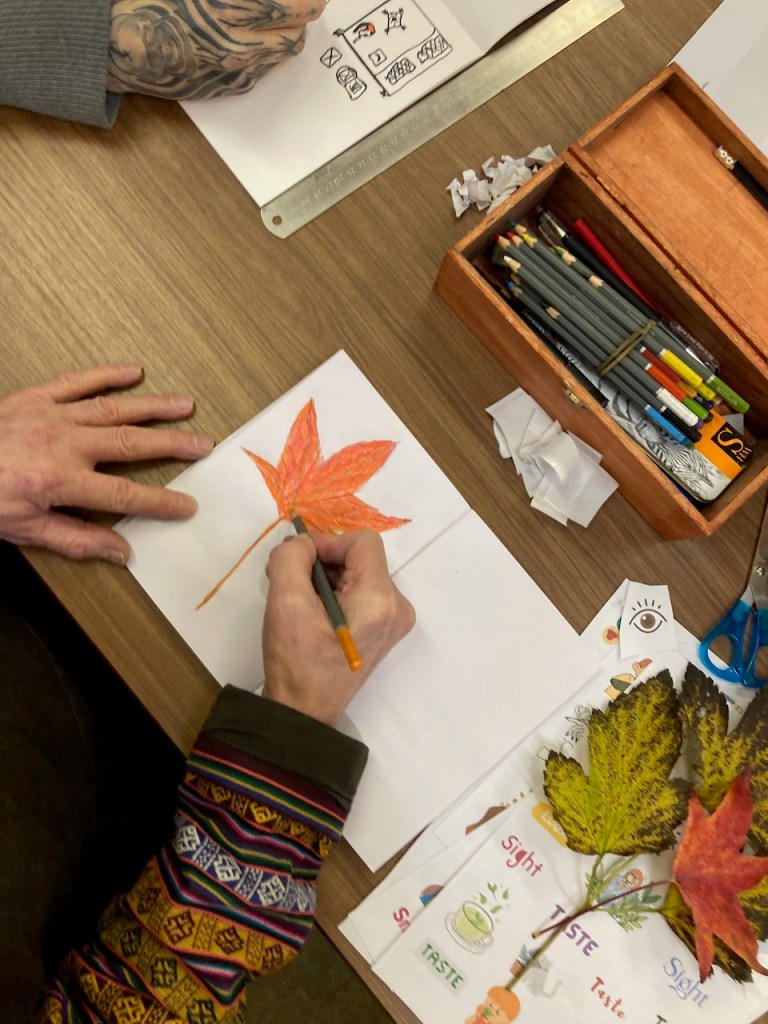
I’ve recently written and talked about nature and cultures of care in my group and podcast. I’ve also written a lot more about this in Making Meaning Journal Autumn 2024 issue. I didn’t have space in either of these to fully explore my year-long residency with Peace of Green 2023-2024, so I’ve created these pages. The Journal and the Podcast are good companions to this page.
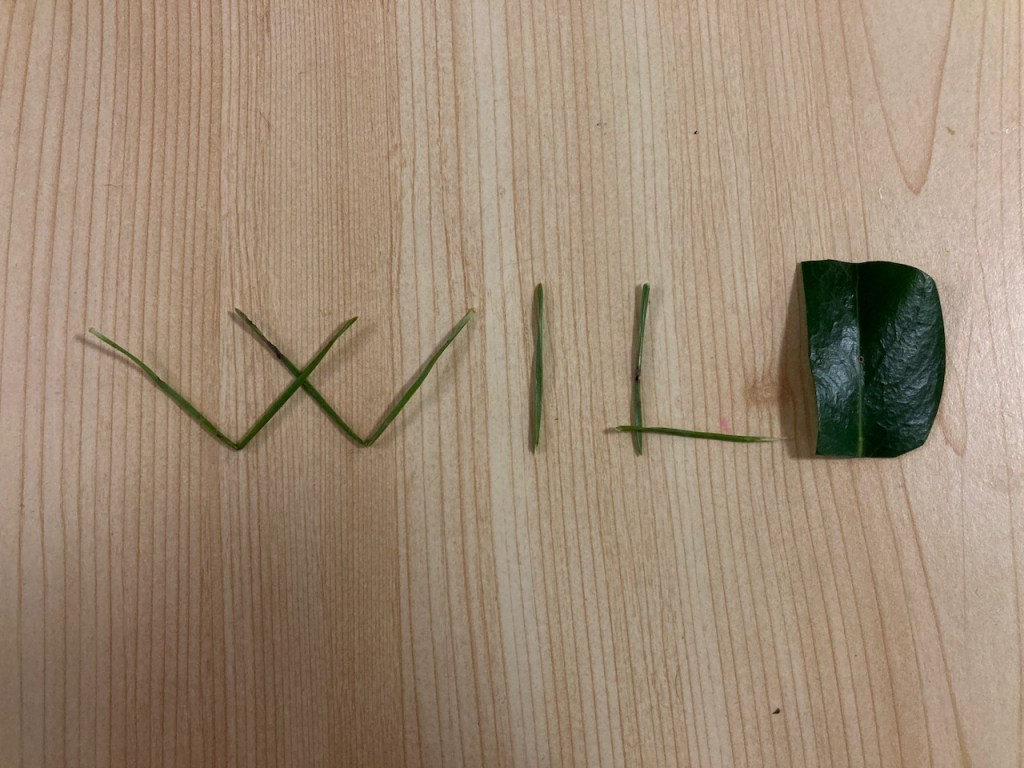
I approached Joss and Evelyn (Peace of Green CIC) about working with them while I was developing the Cultures of Care funding application in 2022. I was originally thinking about working with them to bring a new group together to work on a landscape history research project, but eventually decided that wouldn’t really work. That idea has actually become Places & Traces which is ongoing. As PoG secured funding to run weekly sessions at the same time as my project funding, I decided to tag along with their group as visiting artist once a month – a slow, open-ended residency.
This long, slow project has allowed me the space to be creative and imaginative without the pressure and expectation of having to make something to show for it at the end. It is about being in nature and exploring my own responses rather than feeling that I have to demonstrate my value through making a community quilt or even a body of work of my own from this time. A community engagement project which is so open-ended is liberating. There’s no funding criteria to meet, no boxes to tick, no public benefit to quantify. It is pure research and pure creativity which I have shared with participants and project leaders. Anecdotal feedback has been great, the engagement has been really inspiring and encouraging. Their openness to my weird ideas has been joyful.
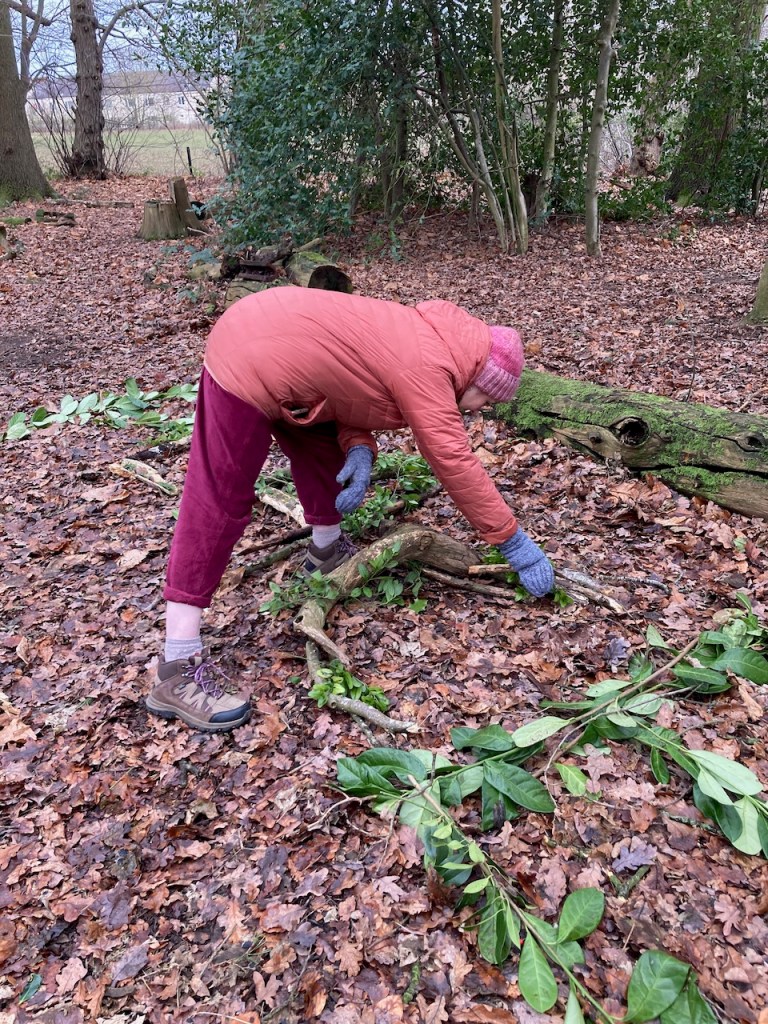
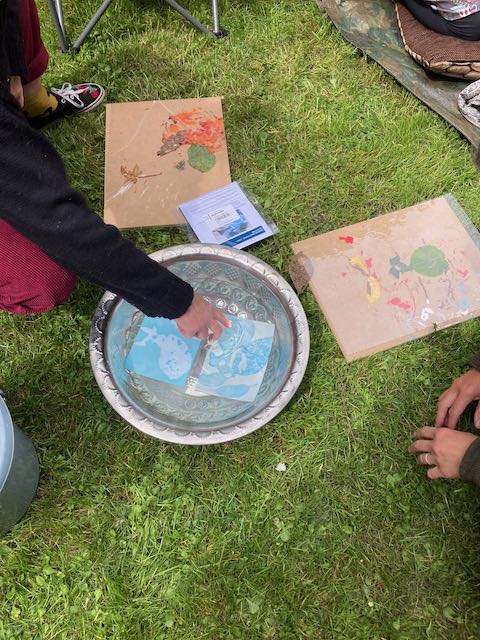

I have wanted to redesign artist residencies for a long time. So often, what could be a really productive nature meaningful engagement turns into an exercise in running workshops and producing a group artwork. That’s not necessarily a bad thing, it’s often a very good thing, but it’s not the only way to engage with people. The workshop model also isn’t the most exciting or creatively-challenging way to work for the artist either. I wanted to try a more relaxed residency approach, one that is about research and discovery as much, or more, than about outputs. It’s about learning and trying new approaches, about understanding the group and how they respond to being in nature. I’ve noticed how different the indoor winter sessions are, how different participants affect the dynamic of the group, how people want something to make, how people are more relaxed and receptive outside and are happy to just relax and enjoy the surroundings, rather than inside when most people seem to need something to do or to focus on.
I have learned an enormous amount about how the two group leaders work and how outdoor wellbeing practice different from artist participatory practice. I suspect, although I can’t empirically prove it, that being outside increases creativity, responsiveness and curiosity which fuels the willingness to engage with quirky, nature-based activities.
I began with a curiosity about how much artist practice, my ways of working, research, seeing the world, could help, support and encourage nature connection. Could my ideas and processes generate new ways into connecting with nature for both the group leaders and participants? This was thoroughly experimental, with no fixed research proposal or method, just my usual way of working: try and then reflect.
From time to time I tried to bring in concepts and themes of interest to me like access to nature and land use, history of the gardens and the idea of gardens as caring spaces. While these ideas connected with the group leaders, the majority of the group were less interested in these more abstract concepts, and clearly preferred making to research and discussion. I parked those ideas for another project and remained focussed on what the participants wanted from my sessions which was mindful creative, nature-led making.
I have brought an activity to each of the sessions, each of them responding to:
- The season or weather
- The previous session and what came up
- My own feelings and ideas I wanted to explore
- Research on nature-connection and outdoor engagement
- What has been catching my attention in nature the previous month
Each of the activities I created was new to me. None of the activities involved sewing. Hardly any of the activities related to my previous artist practice. Most of them used plants found in the gardens, with only a little addition of some artist materials. All of them were creative sparks which inspired me in new ways, either research-focussed or making-focussed. This was not my plan at the start: I had various ideas about what might come of this time.
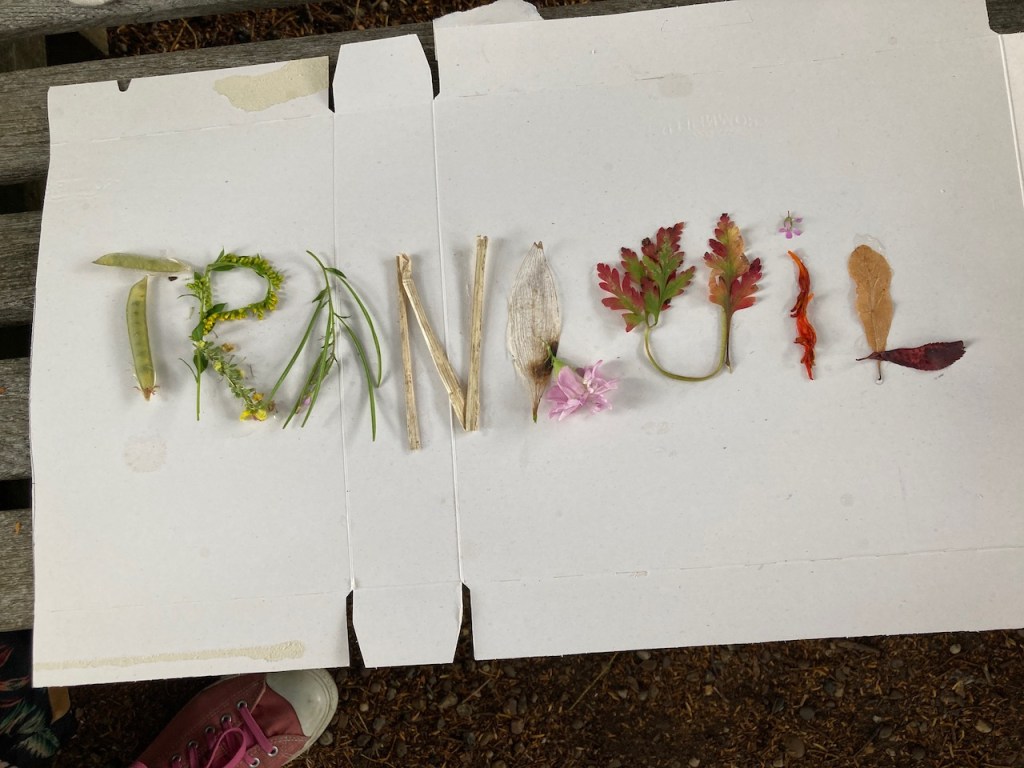
Initially I was just going to attend sessions as research, see how the group leaders ran these sessions, observe and interact with the participants and explore what nature connection work looks like. After the first observational and conversational session, I decided to create an activity to spark curiosity and generate discussion about nature and care. I developed an idea around making amulets of protection using found materials in the gardens, with some threads to bind and connect. I’ve used amulets as a form many time in my previous work, with schools, for myself and with adult groups. It’s a well-understood, universal concept of protective and meaningful objects and often resonates well with participants. I was so delighted when this proved true for this group as well. We collected fallen leaves, seed pods, twigs and other natural treasures and used my naturally-dyed threads to bind, stitch and wrap. The group members took to it straight away and spent a happy couple of hours collecting and assembling their pieces. A couple made pieces that could stay in the gardens but most took them home.
The following Spring, when I started back with the group after a winter break I needed something new to work with. My Maker Membership theme at the time was Hearth & Home so I was researching concepts of home, security and fresh spring starts. I decided to try to make nests from gathered natural materials. My first attempts in my garden were education and mostly disastrous, but I learned what materials worked and what to leave out, and took this fledgling idea to the group. They flew!
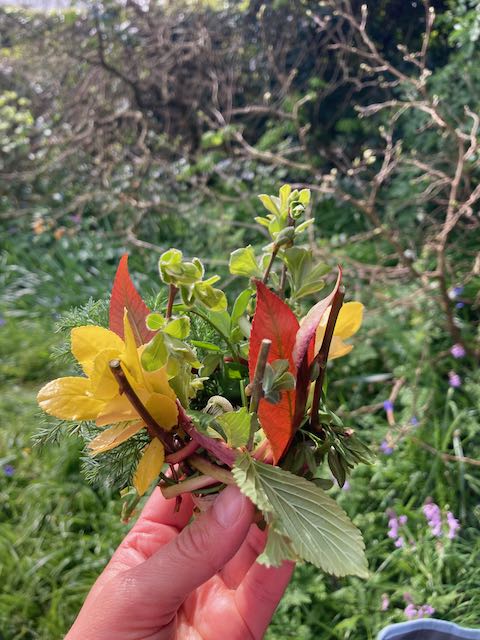
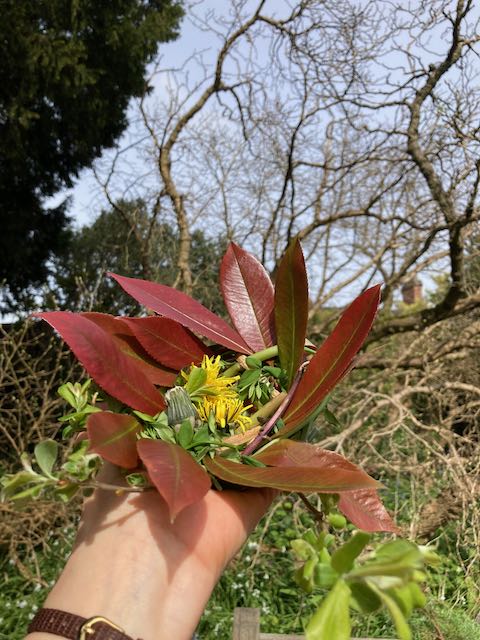

As with all of my sessions, I began with talking about my thinking, my research around the idea. In most cases there are the ideas I start with and then there are the additional thoughts that come up during the making process. In the case of the nests, I started with thinking about safety and new life and spring, but as I made the first practice nests, I thought about the different plant materials and their properties, about how we need to respect and connect with the stems and leaves to understand their part in making nests – what is pliable, what is fragile, what needs care, what is robust. These thoughts on materials are all part of the reflection process, the wellbeing element of the research – talking about fragility, temporality and care of ourselves as well as the materials and making. As I made the first nests I realised that careful holding of the growing nest was necessary, cupping a fragile thing in the palm of your hand and I shared how meaningful and tender this process was. I shared how the nest will change over time as it dries and changes, and we talked about how this is part of nature’s processes and change is inevitable. We cherished the process and the care, connection and curiosity involved in this slow, considerate way of making. We noticed that the process is the key, not the outcome. The finished nests were beautiful and meaningful, but they won’t last and that is ok.
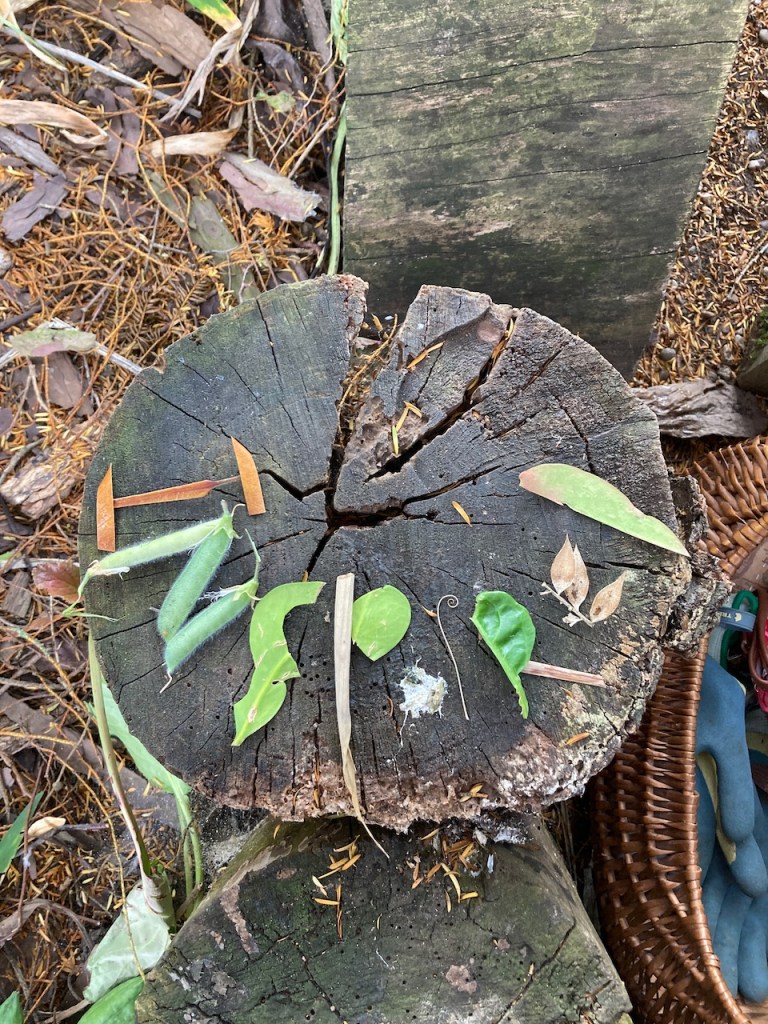

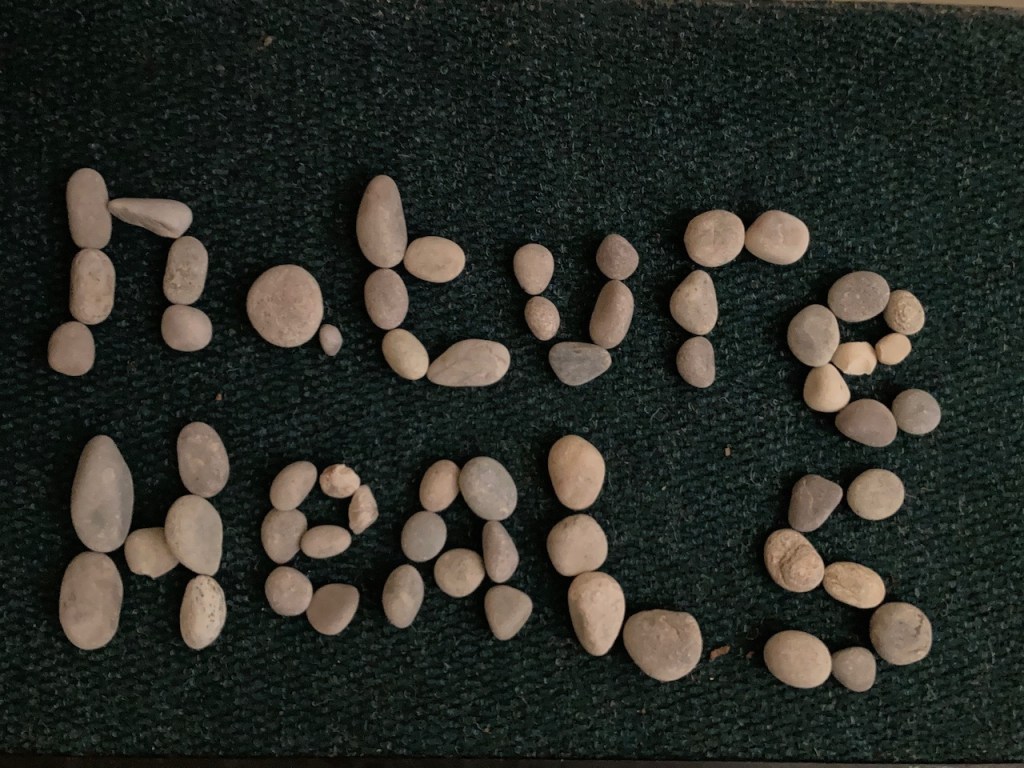
Images above and below are the participants’ words about nature connection (above) and what they get out of being part of the project (below).

Reflecting on the project
I don’t think I am about to change the way I work and use natural materials in place of my beloved textiles. I am absolutely sure about that. Having said that, the engagement with natural materials, with the people involved in this project and the conversations we’ve had have been very nourishing and inspiring for me. I have been thinking about what the artists’ role is with group like this, what my purpose is with this project, what I have achieved.

Thinking back to my early ideas for this residency, I was interested in exploring the idea of natural spaces as places of care. I started thinking about community gardens and semi-public/ semi-private outdoor spaces and how they contribute to care in society. These non-public spaces are more safe and relaxing for many than public parks or open countryside where many people don’t feel comfortable. This is not the route I ended up taking with the group as their interests and needs led my activities, rather than the other way around.
Instead, I focussed on artist practice to inspire nature connection, new approaches, activities and ways of seeing things to help the group participants and leaders to learn, explore and be curious. This in itself was responsive to the conversations and feedback I got from the group.
The connection with the group, coming with an open mind and no fixed outcome has been incredibly useful to me as an artist working in community engagement – to think about how much of myself I bring and how much I am a conduit for their creativity. I hardly ever mentioned my own practice in these sessions. I brought some of my nature-based work, Blossom & Thorn, to one of the sessions but on the whole I was responsive to the place and the people, rather than exploring my own interests. This was refreshing and thoughtful for me. I have one more nature-based residency this year, where I am working mostly by myself rather than in a group and I have space to explore my own ideas more freely.
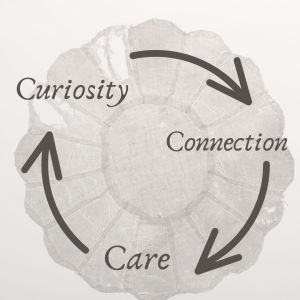
Through this residency I developed my Curiosity, Connection and Care cycle model which has been the foundation for a lot of my thinking over the last year throughout the Cultures of Care project. I noticed how curiosity was heightened outside, in an interesting place, and that through that curiosity people develop connection, engagement and understanding of the natural world in its details and its processes. Through building that connection, we generate care: care for the natural world and the places we are experiencing, but also personal and self-care, community care and connection with others in the group and outside. I’ve used the same model in looking at research-based practice, about connecting with material objects and buildings and about community practice and other projects throughout my life and work.
This residency has been quiet, slow and thoughtful, and alongside that, enormously inspiring, beneficial and nourishing for me. I may not continue working in exactly the same way, with plants in gardens, because museums and textiles are calling to me, but the learning in how I work, how humans connect with stories of care and how I can support and generate care is of long-term value to me. I hope that me sharing these reflections will enable you to also be curious, connect with your people or places and enable more care in your creative practice too.
Nature & Care essay and podcast
Nature and Care: Making Meaning podcast Episode 43
My Cultures of Care project wasn’t intentionally all about nature and landscape connection, yet that is what a lot of it has turned out to be. This podcast episode, and the essay below, is my exploration of how nature, outdoors and landscape in its widest sense have influenced my work. I talk about projects on…
Creative Nature
Exploring land and nature-based projects for Cultures of Care I missed July’s Cultures of Care Group. I had to cancel because I had covid and had no energy for sharing my reflections on my care projects at the time. I’m better now, luckily, and looking forward to connecting again with a wonderful, supportive and engaged…
Community artist residency
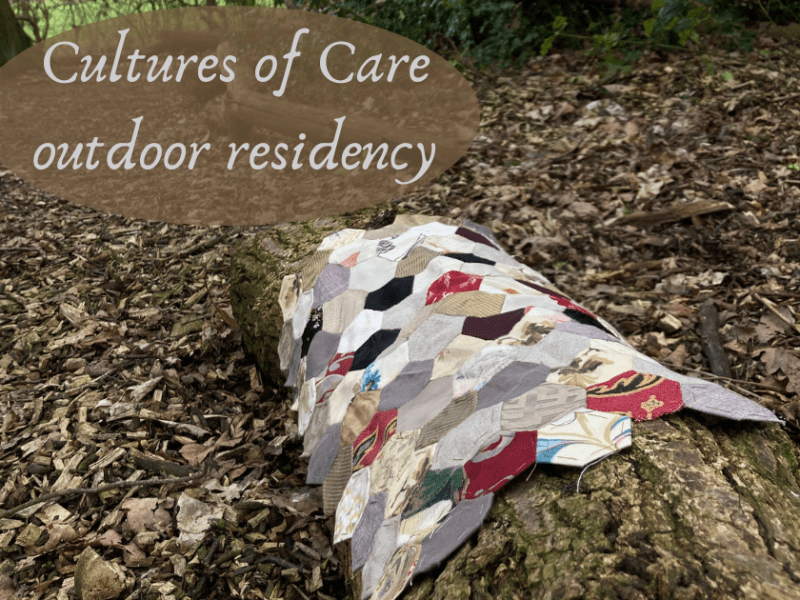
On Monday I joined Peace of Green’s Wellness in Nature group at Belgrave Hall gardens in Leicester. I’m artist in residence with the group over the next year as part of my Cultures of Care project. Once a month I’ll spend a few hours with the group, observing and chatting to people, running activities and…

 Ruth Singer