
I’m working on an ongoing research and making project looking at homes, eviction, displacement and migration. This project crosses paths with my Borders project and lots of other ideas I am exploring.
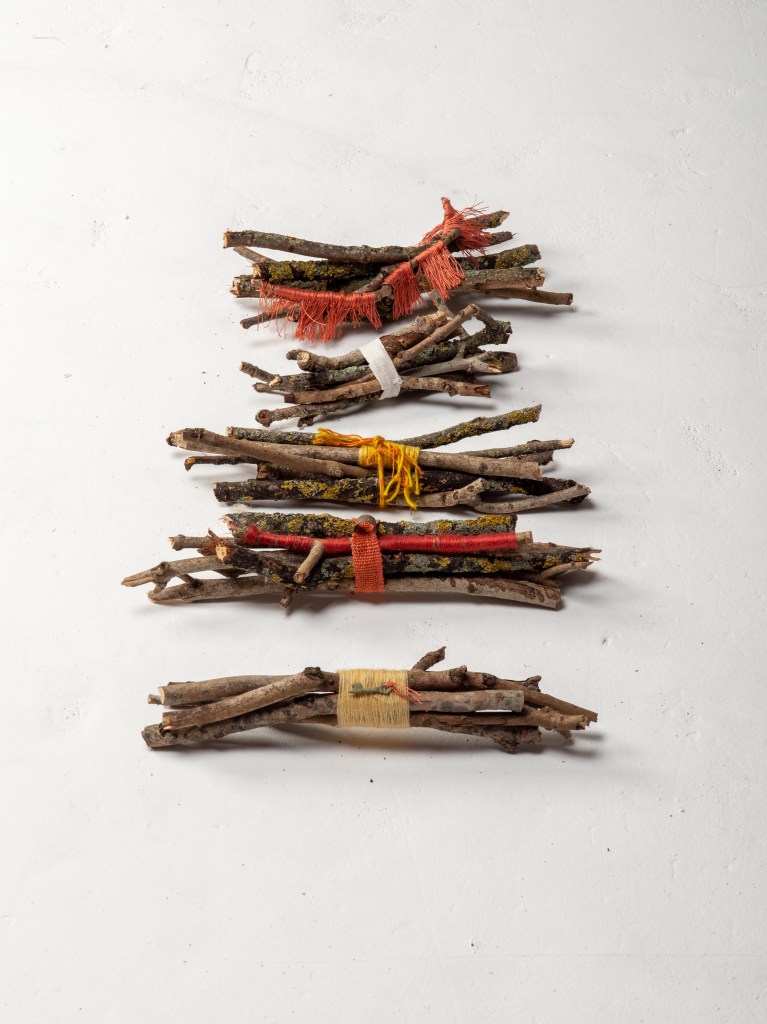
Firewood
In medieval villages, people had the right to collect firewood on common land in bundles called faggots. As that common land was lost and the villagers evicted for more profitable sheep farming, the fires at the heart of their homes went out. These bundles of firewood represent some of those who had to leave their homes and their hearths.
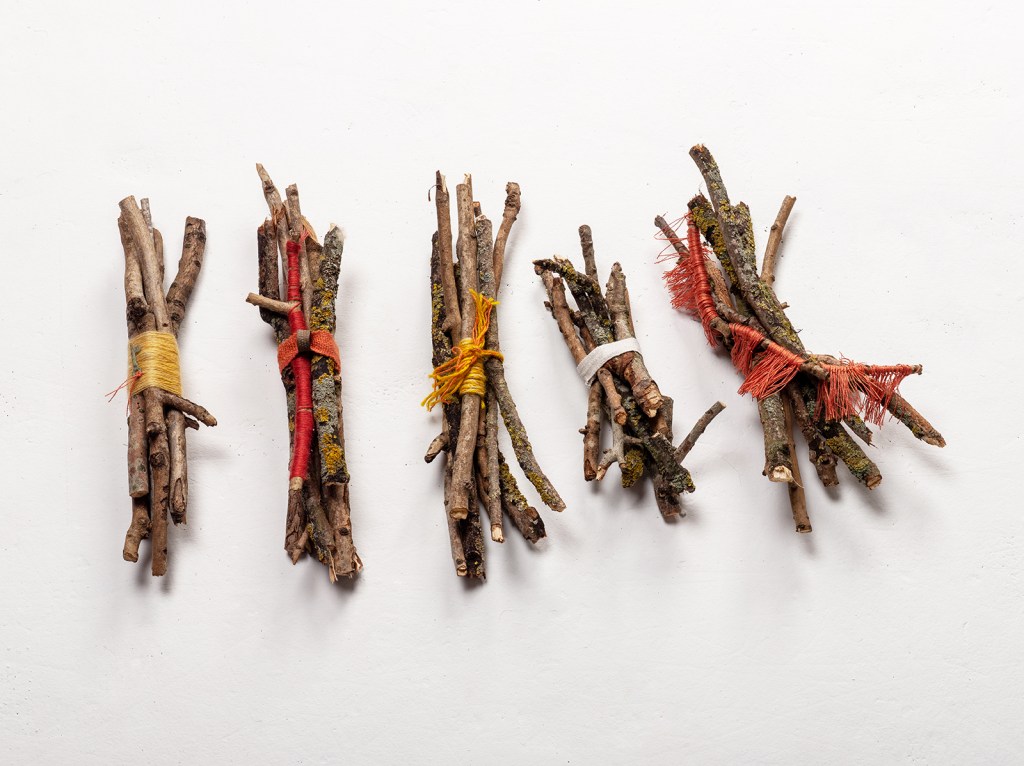
Oak and ash twigs collected from deserted medieval village sites, with naturally-dyed wool and linen threads, medieval metal objects. Hand weaving, braiding and fringe techniques, all medieval processes.
Hawthorns
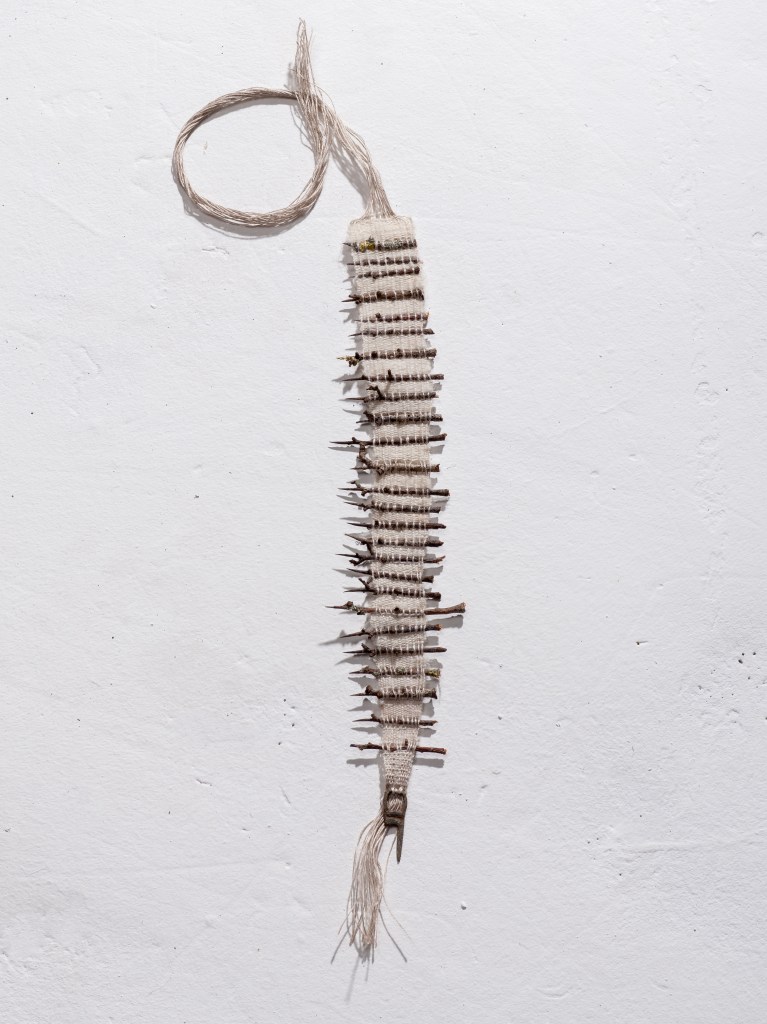
Sheep farming and wool production took over the now deserted villages and common land and often hawthorn hedges were planted to keep sheep in and people out.

Woven natural wool with hawthorns embedded. Found medieval belt buckle fragment.
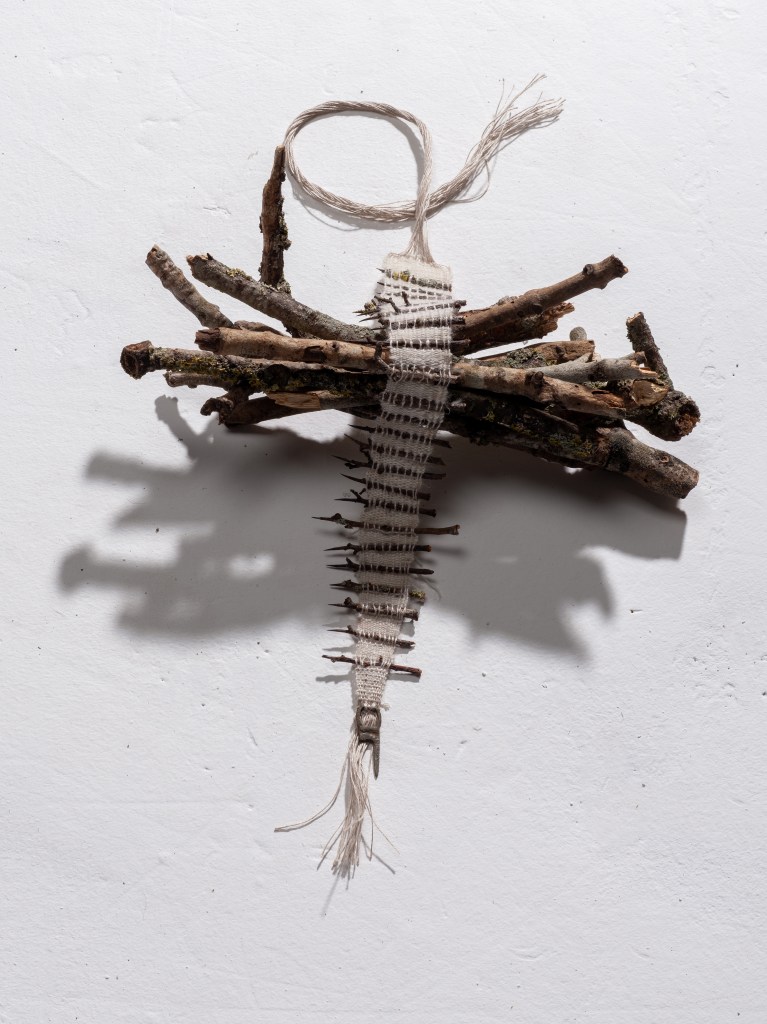
Firewood amulet
Like the other firewood pieces, this simple stick has many meanings. The binding and pins represent people and their connection to their home, which was broken by eviction.

Paths
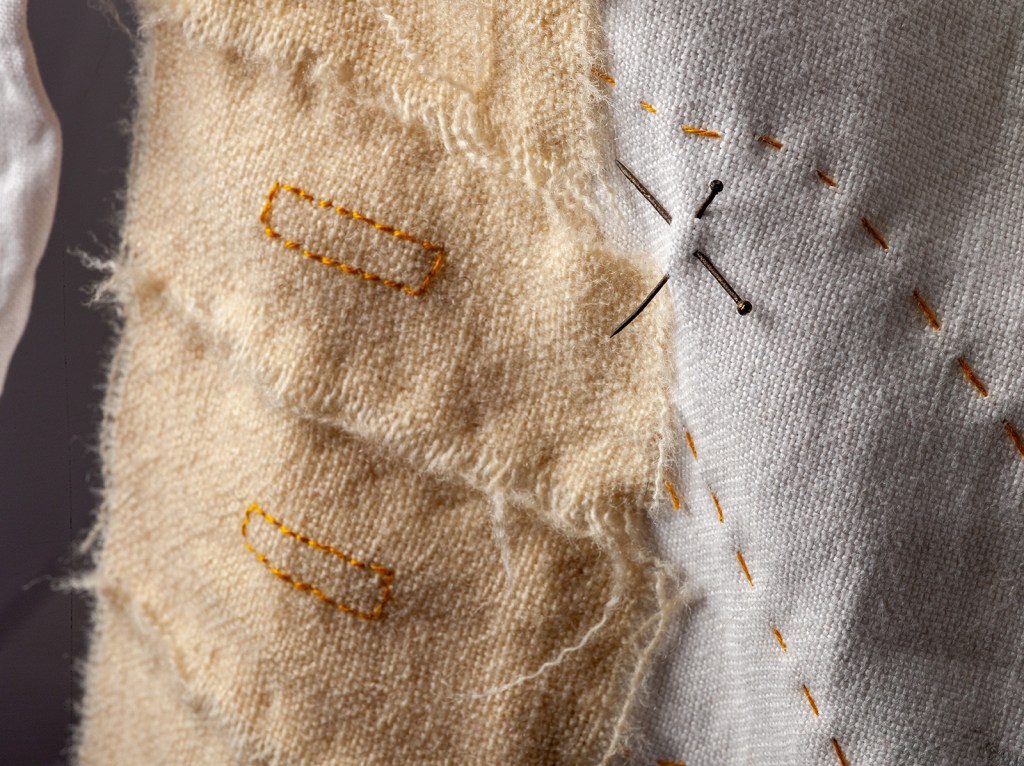
This linen apron tells the story of a deserted medieval village. Wool rectangles represent the domestic plots with houses marked in stitches. The threads represent the paths walked when the villagers were evicted. The old pins are the people and I keep moving them around this piece as I’m not sure where they belong.


Hearth cloths
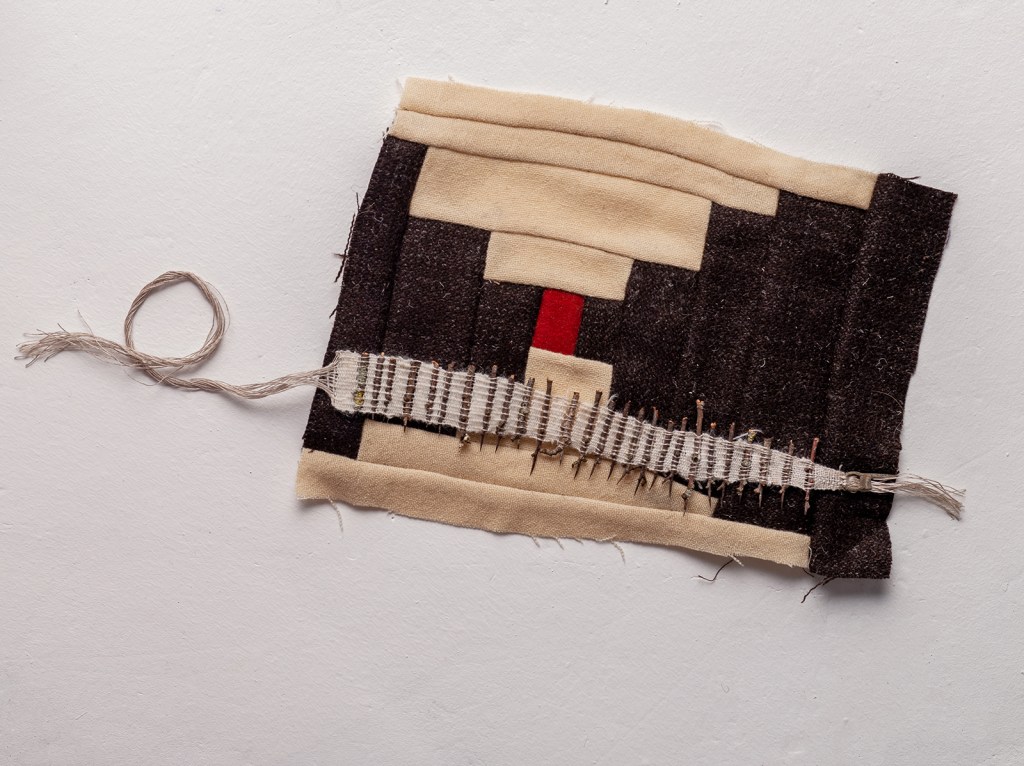
The central red piece is traditionally known as a hearth in this patchwork design called log cabin. My wool patchworks represent medieval peasant houses with a vital fire in the middle, which was extinguished when the residents were evicted and their homes destroyed. My intention is to photograph these hearth cloths on a medieval village site.

Part of Cultures of Care
This is part of my two-year Cultures of Care project funded by Arts Council England 2023-2025.
Cultures of Care is an umbrella for several creative activities including residencies with community organisations, research projects in museums and new work on topics such as migration, destroyed communities and other hidden stories of care and damage of people, places and objects.

 Ruth Singer