

Linear map of the entire National Forest Way with hedges studied by volunteers marked. Hemp-silk & hand embroidery.
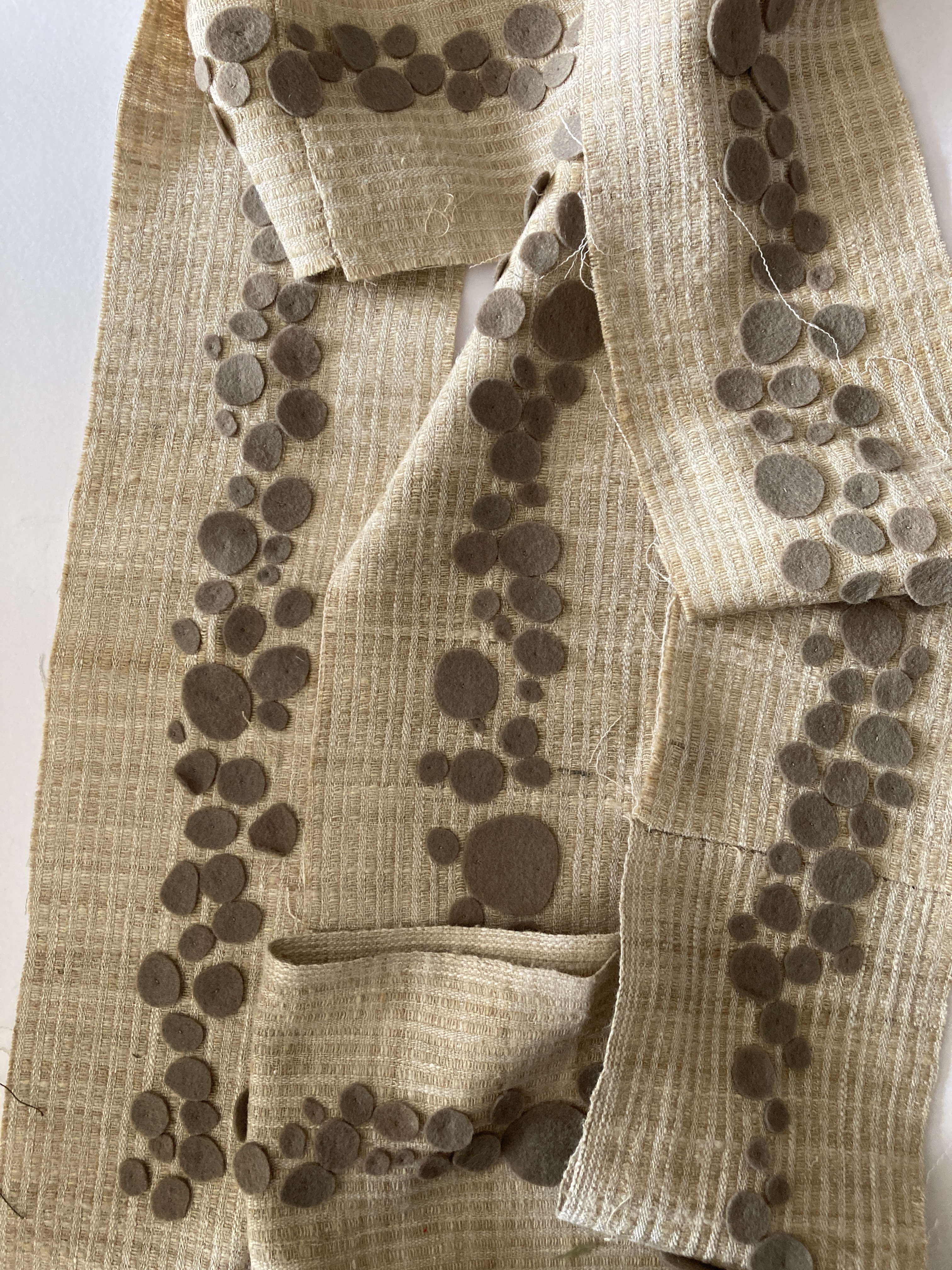
Hedge density – each felt circle represents stems of hedges which vary in density and size. Wool felt on peace silk, hand stitched.

A list of all the species identified by hedge-spotter volunteers. Each type of tree has a unique stitch shape. The order is the order they appeared in the spreadsheet. Hand embroidered on hemp.

Hedge skyline, drawn from photographs taken by volunteers of overgrown and poorly-maintained hedges. Wool felt and silk organza, hand stitched.
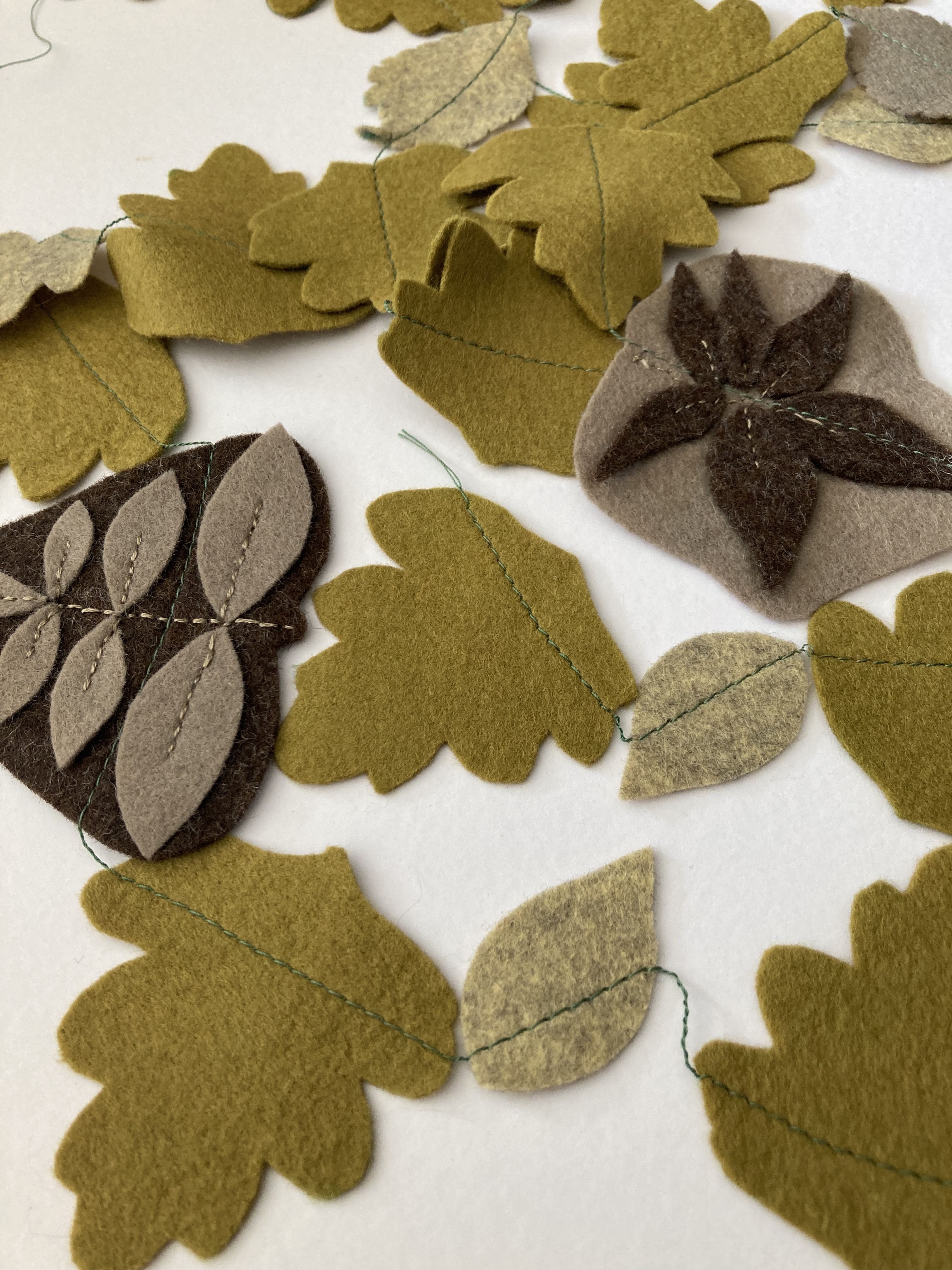
Species garland showing the dominant species in the sections of hedge surveyed by volunteers. Hawthorn is by far the most common. Wool felt, hand cut, machine stitched.
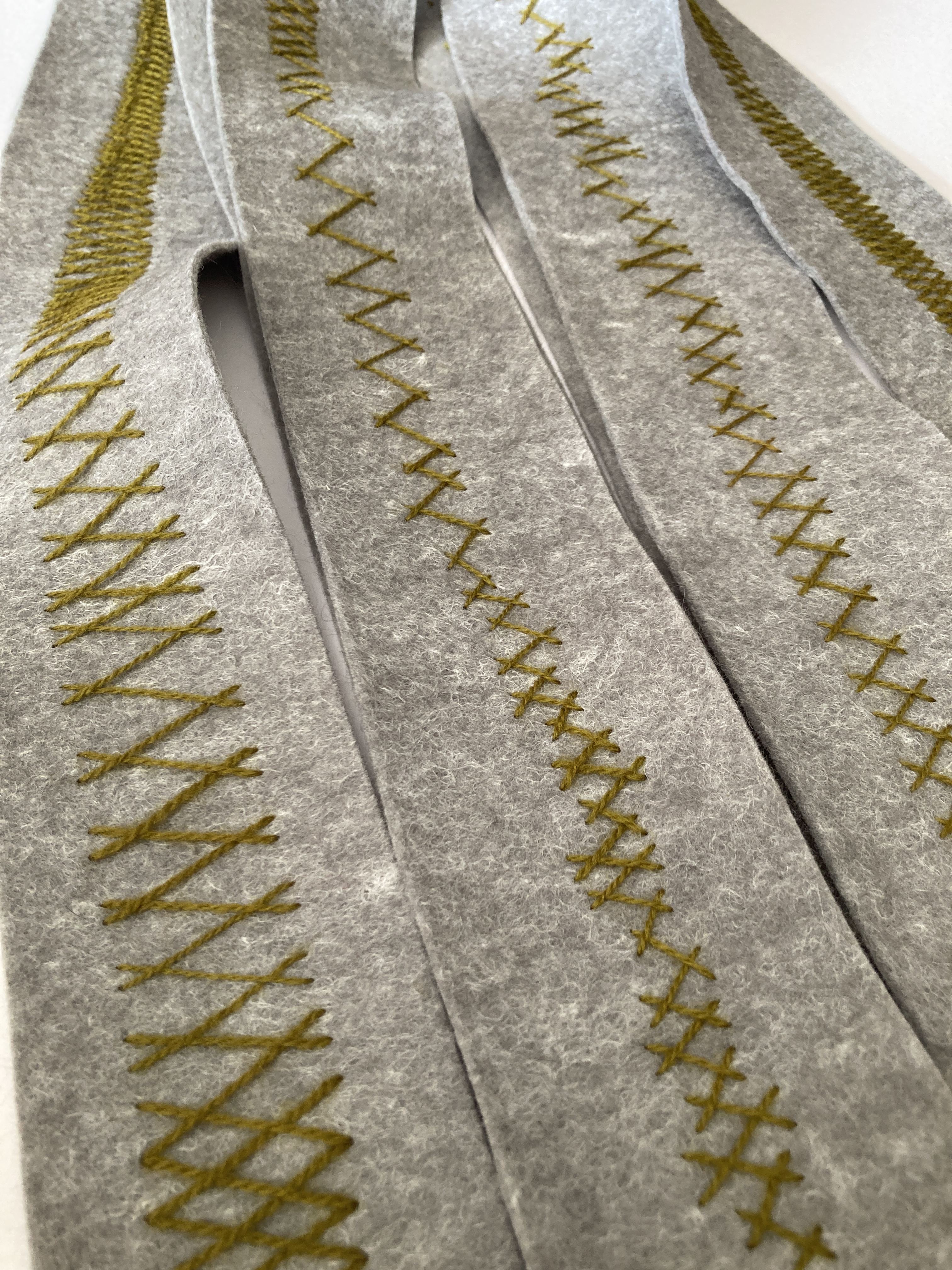
Hedge density in herringbone stitch. This long piece represents many different hedges which can be close clipped and dense or wild and overgrown and many states in between. Hand embroidered in wool on wool felt.
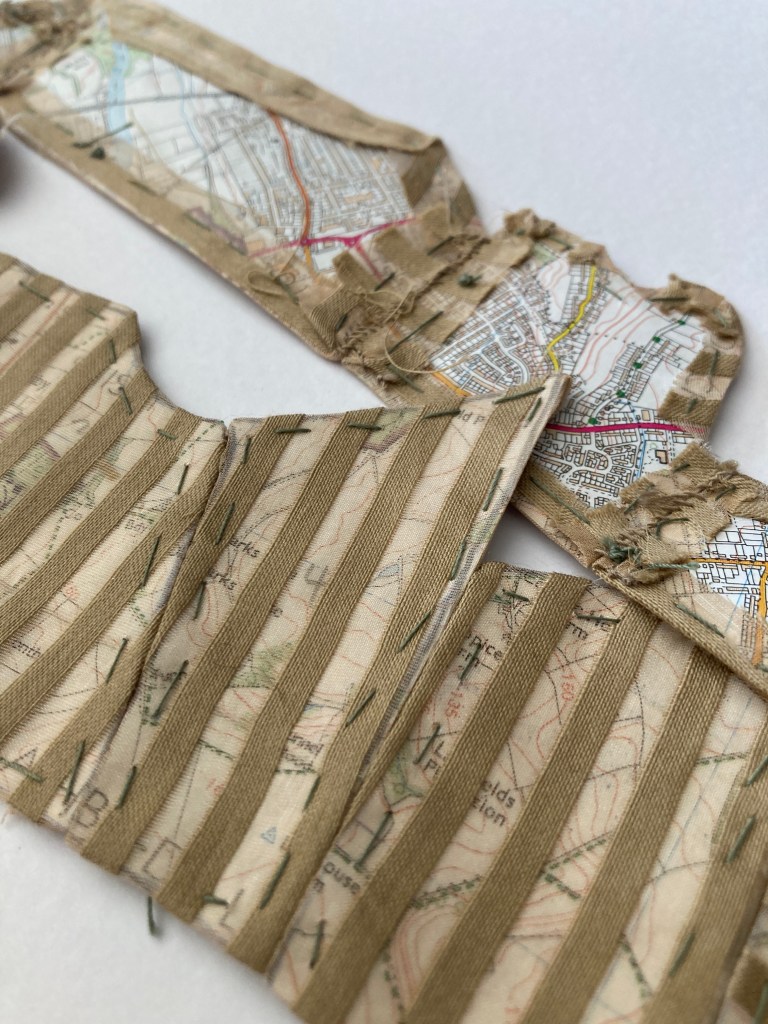
Patchwork of hedge / field shapes from a section of the National Forest Way. Old map of the area used as patchwork papers covered in silk, hand stitched.
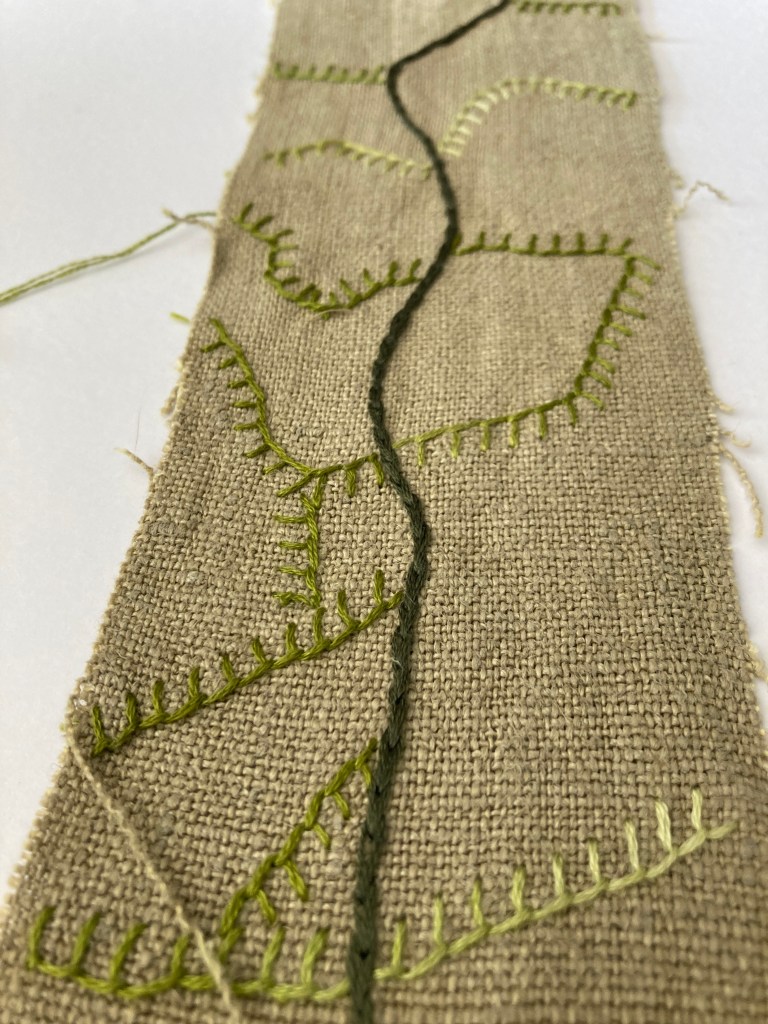
Hedge lines alongside the National Forest Way. Blanket stitches mark the hedges. Hand embroidered on vintage hemp.
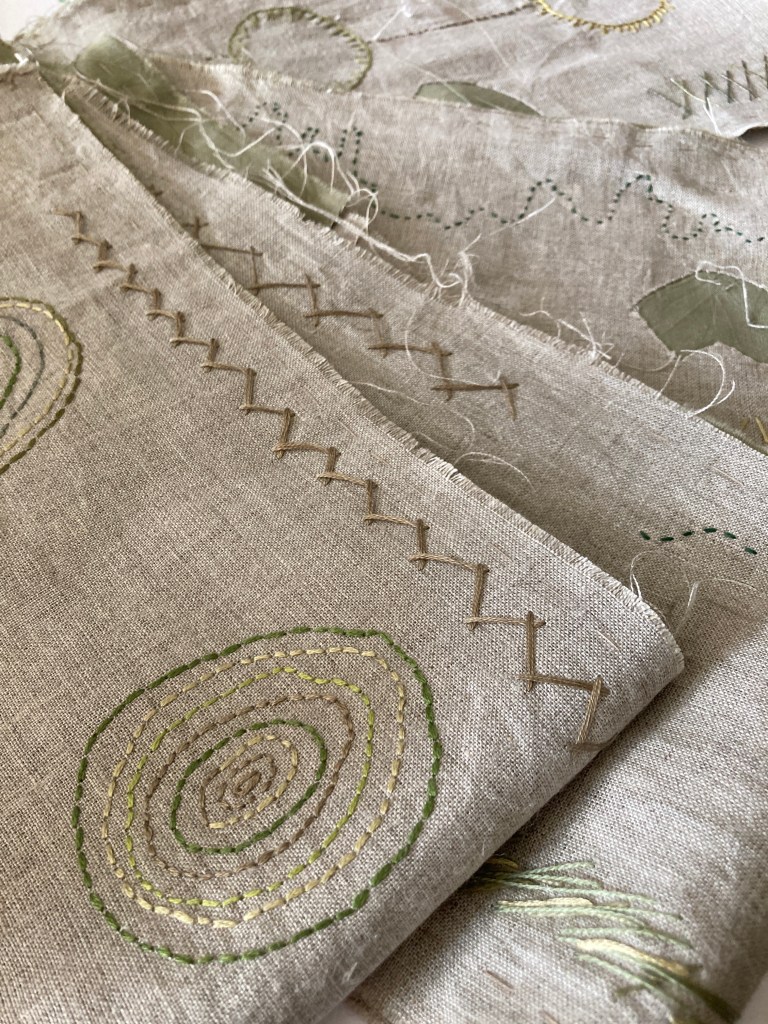
Hedge data collected by volunteers. Marks represent the number or percentage of reports of particular features including thick stems, laid hedges, standard trees, lost hedges and fragments. Hand embroidered on linen and cotton.

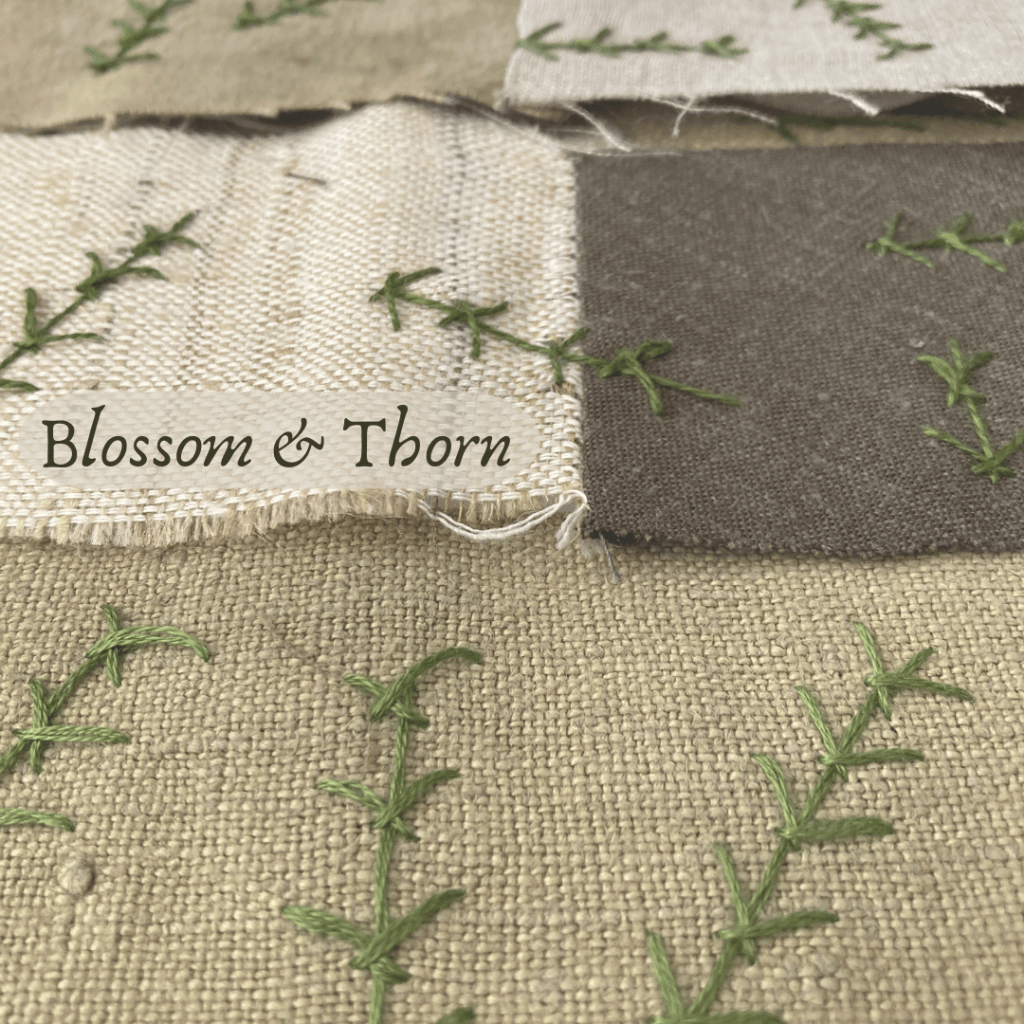
Thorn Stitch. The majority of the hedges in this area are hawthorn. This piece represents those hedges along a patchwork of fields. Hand stitched on various natural fabrics.

Digital print with comments and feedback from hedge-spotter volunteers.

 Ruth Singer