An exploration into the details of my textile collecting
This short essay was sparked by a writing challenge on Substack, set by Beth Kempton. It’s may first post there, and I am probably not going to change over to writing on Substack rather than on my own places – this website, my printed publications and my Membership, but it’s nice to have a nudge towards writing for writing’s sake and share with other writers over there. And then here.
The topic for last week was Specificity – about details and looking closely – and one of the prompts was to think about collections. I don’t need much encouragement to write about my textile collections and the emotional connections between cloth and humans.
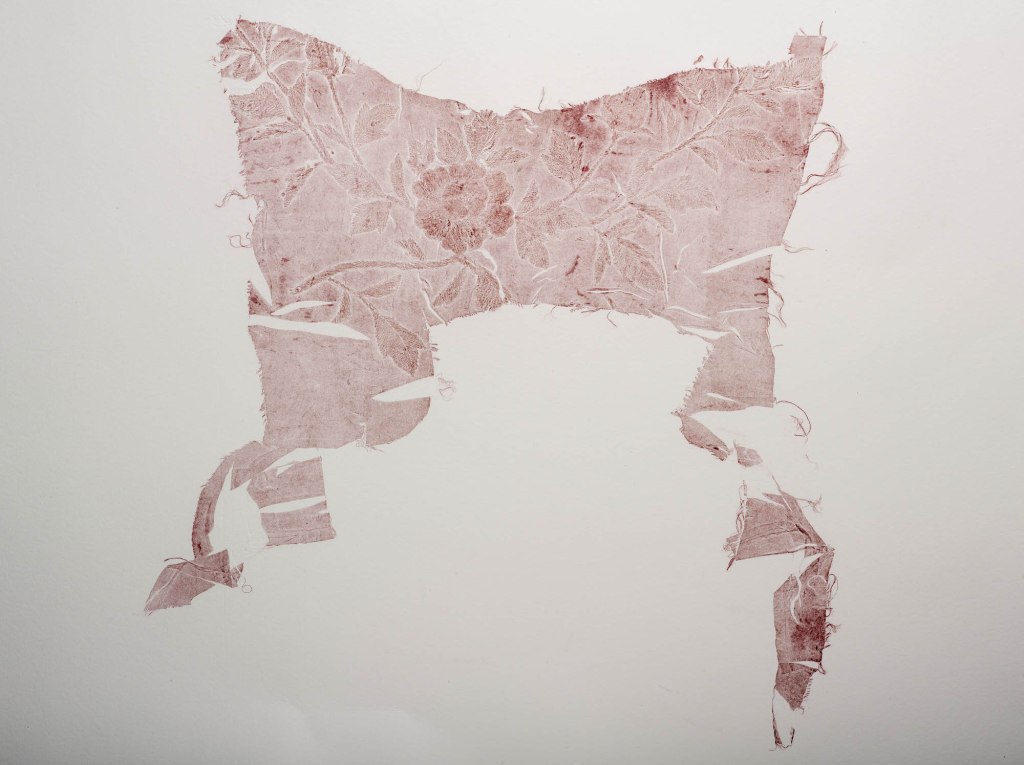
I collect things that are no longer all there. Holes. Fragments. Faded colours. Spaces where stitches once were. Broken threads. The spaciousness of gaps and absence says so much, they are places for ideas to grow, for stories to fill.
I’ve been obsessed with historic textiles for as long as I can remember. Unlike many textile artists, I didn’t grow up in a house of sewing and crafts. I didn’t learn to stitch at my seamstress grandmother’s knee, though surely I would have done, should have done, had a brain tumour not taken her three years before my birth. I grew up with a heightened sensory experience of cloth and a passion for seeking out textures and textiles. There were some good textiles around in the 70s. We had William Morris curtains and a textured custard yellow sofa in the front room where kids were rarely allowed. We had a dressing up box filled with the other grandma’s extravagant cast-offs including a fur coat and a silk chiffon capelet. Her wardrobe was my playground, I loved touching the velvets and silks. One of my great aunts sewed and she made me stuffed toys and dresses for my dolls. My beloved auntie didn’t sew clothes but she loved textiles – making patchwork quilts and wearing the most beautiful clothes I could imagine. I associated textiles with clothes to be worn (or to aspire to), more than sewing itself, in my childhood. Early on I was taken to costume museums and spent many a happy hour with my nose pressed to the glass cases, drinking in sleeve ruffles and brocaded silks and pristine white petticoats. In the early 1980s, costume museums were in abundance, at least here in the midlands, with fine examples in both Leicester and Nottingham, both places I spent a lot of time. By the time I qualified in museum curatorship, they were on their way out, being subsumed into hard-pressed local authority museums services, and eventually vanishing without trace. I never did get the job as a museum textiles curator that I had dreamed of since I was seven. If I had, I wouldn’t be here though, aged 50 with a twenty year career as a textile artist and historian after a decade working in other jobs in the museum sector.
Thanks for reading! Subscribe for free to receive new posts and support my work.
My working life has taken a few twists and turns, but looked at as a whole, I have worked with or amongst textiles for almost all of it. I am glossing over three barren years working in a transport museum when I had to make do with bus seat moquette and a few conductor’s uniforms which did not spark my creative or historical fire in the way medieval tapestries and 18th century mantuas did, and do. Having spent my 20s becoming disillusioned with the museum world and physically broken by spending all day sitting at a computer, I quit my lovely job at the V&A to go freelance and develop my creative practice. Over the last 20 years a thread of textile history has run through everything I do, from writing books about sewing (with historic examples) to creating my own artwork and of course building, curating, my own collection of historic textiles, many of them damaged. Now, as I go into the second half of my life, I am steely focussed on making textiles and textile history the warp and weft of everything I do. Writing about textiles is part of that weave.
As I’ve built up and established my artist practice, using first vintage and reclaimed fabrics and now mostly antique textiles, I’ve also built up my collections of cloth and clothing which inspires and fascinates me. Some of the textiles I gather is for use in making my artwork but as I am very careful about what is ok to cut up and what is not, plus I actually don’t make all that much, the majority of my collections are for study, inspiration, research and for writing about. I started buying damaged textiles, such as falling apart Victorian silk skirts, because they were cheap. Really cheap. A dozen years ago I could buy a tatty Victorian dress for £20, but inflation has impacted even these unlikely commodities. Once I adapted my creative practice from making functional things like cushions and scarves to textile art, I stopped buying useful, practical old curtains or unused dress fabrics that would wash and wear well. I now buy totally impractical, barely useable fragments of worn out quilts, dresses with holes through like the very hungry caterpillar had popped in for a silky snack (actually mouse damage), or embroidery so worn that the holes are all that’s left of the pattern made by the needle and thread.
I do use a tiny amount of the less-precious textiles in my work but I am very considerate and selective, saving the most interesting, rare or important pieces in my own little museum of holes. I’m more interested in studying the textiles than using them in my work, I am quietly horrified by some of the textile art practice around me using old fabrics, but I am also pragmatic that they are better cut up and shared in artworks that ending up in landfill or simply rotting away in an attic. I am, I now realise, a researcher, a textile historian more than a maker. Research comes first. It influences, inspires and grounds my artwork, but the researching of old textiles is more my practice, more my passion, than making things. The holes, the tears, the faded and threadbare, the mouse-munched and moth-eaten, the chemically-ravaged, the worn to literal rags – these are my precious story-containers. How did those holes happen? Where was this left to fade in the sun? Who wore this dress so much that the sleeves wore thin? Who, in a misguided act of care, washed this aged quilt and rinsed away half the fabric? Wear through long use and repairs and alterations tell us stories about value and the investment of time, of attachment and of a thought for the future. These are all metaphors for the human experience, of care and connection, of hopes and dreams, of hurt and healing. I have used all these associations in my own work, and celebrate just how powerful textiles can be in telling emotional stories. Cloth is so tied up with sensory memories, we are all surrounded by it, all our lives. Damaged cloth is even more narrative-filled, if we only allow the stories to surface, if we see the care in every stitch, every wear and every repair.
In 2015, in the eye of the storm of a relationship breakdown, I began repairing holes in a threadbare duster, making a physical manifestation of my attempts to salvage what had once been good but was now full of holes. My efforts, in both cloth and relationship, were futile, the cloth so fragile that new holes would appear alongside my darns, echoing the hopeless work of shoring up something that had already irretrievably failed. I called the piece Desperation Darning, and with it’s completion, I knotted and cut the threads and began the process of my own emotional repair. Ten years on, I am grateful to previous me for associating damaged textiles with my own emotional state and creating a body of work that allowed me to share how I felt, connect with others and work my hurt out into cloth and leave it behind.
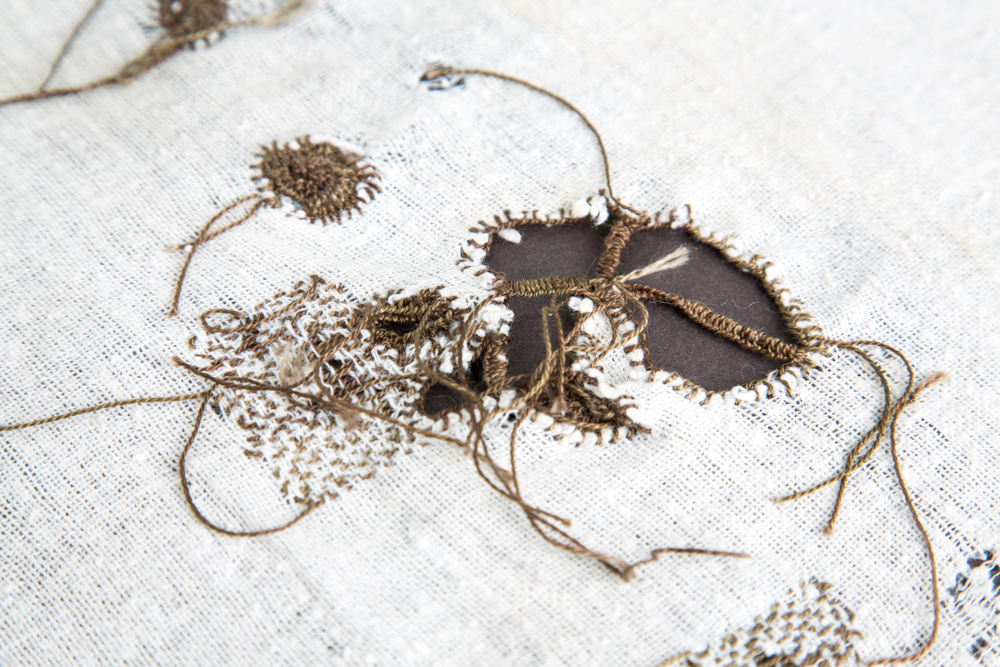
I am long past the desperation darning period of my emotional life, but that connection, once made, between the fragility and changeability of cloth and of human emotions has been endlessly impactful. I can no longer look at damage as a disaster for old fabric. I see holes, wear, fading and damage as openings for the exploration of the story of that piece of cloth and the humans involved in its making, sewing, wearing, washing and keeping. The study of old cloth inevitably includes damage at some point or other – silk, cotton, wool are all simply too subject to the environmental and human actions to survive intact for long. Cloth has been so precious to previous generations that it has been reworked, repaired, preserved and protected, acts of care to meaningful fabric. Each rip or stain allows us to see into the cloth’s history in was we cannot if it is still whole. It might even be a literal way in where a hole enables us to see the back, between the layers, the secret, hidden spaces not seen, not exposed to light for 200 years. Going beneath the surface to explore inner worlds is so heaped with emotional metaphors that I cannot resist it. In one piece, I worked outwards from tiny holes in the lining of a precious piece of silk patchwork, opening up and revealing the inside, the reverse of the patches, hidden for decades. Those small cuts become windows, portals to the interior worlds, the unseen stories. Other times I take cloth away, using intentional removal or highlighting the existing damage, wear and fabric loss. In doing this I highlight the the absences, the destruction or gentle decline and draw parallels to our lives and experiences.
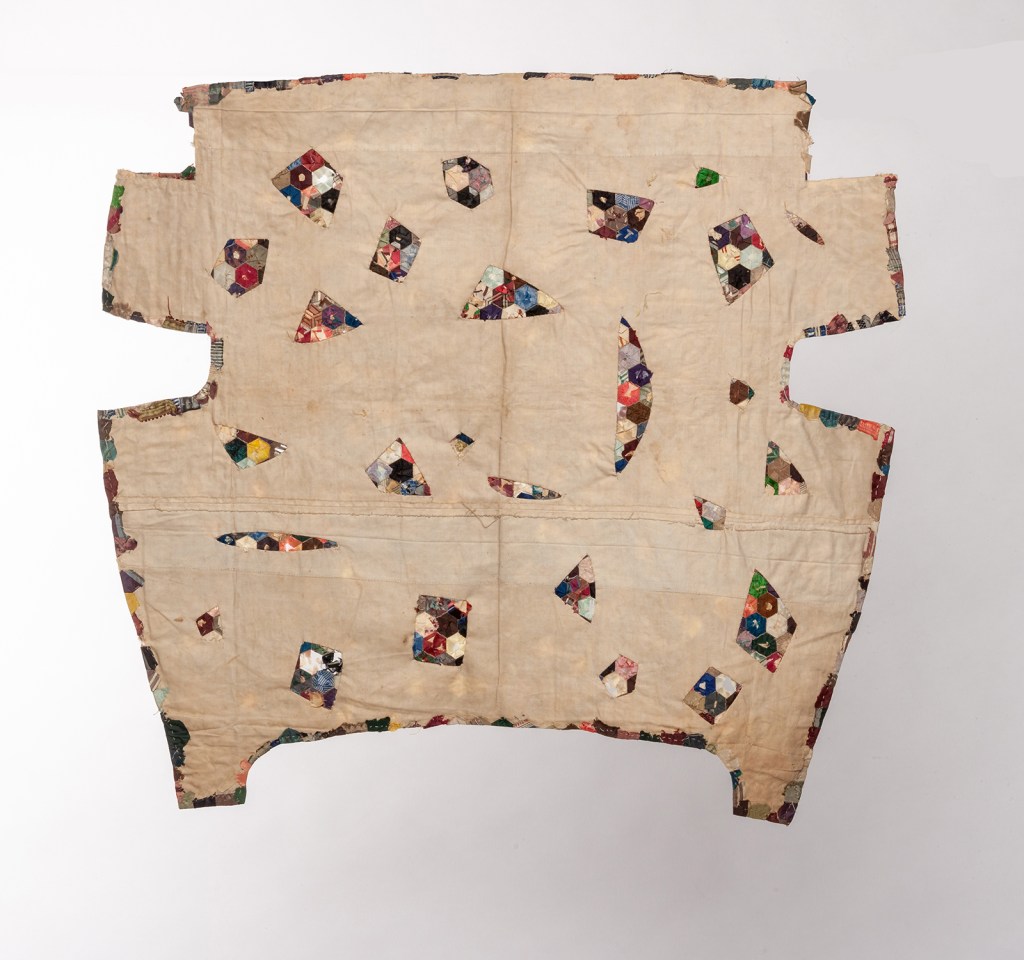

The study of damaged textiles is a care practice me. The fabrics I treasure are too far gone for museums, too incomplete for collectors, too unusable for textile artists but they are perfect for me. My work; making, researching, writing and sharing, is about care, about noticing the small, overlooked and under-appreciated things, about exploring the connections with material culture and our emotional engagement with things. It’s about curiosity, learning new ways to see inside the stories of objects and how to share those discoveries with care and sensitivity. We all need more care in our lives, more curiosity, more connection and more creativity. The more we can be attuned to noticing the under-valued stories of things, the more we can notice the hidden stories of human lives, the more we learn to value what is apparently broken, the more we might understand each other. We need to recognise that damage and fragility is as inevitable in ourselves as it is in cloth and that caring for one teaches us more about care of the other. Recognising damage and brokenness as just one part of an evolving story, not the end, is so vital in understanding ourselves. Through the noticing of old cloth, we can see that ageing is a process, not a moment, that there is beauty and eloquence and wisdom old things, just like there is in our elders. The passing years, the passing moths, just add more to the narrative, more to the story-making potential. Damage reveals so much – the underlying and hidden things, the structures of support, the love, care or forgetfulness of things once treasured. By noting the damage as part of the story, we look beyond the surface-level beauty and we can more easily see the wearer, the hand of the maker, the living humanness of garments and cloth. We don’t need more aspirational perfection in our lives, we need more portals to lost stories and we need to learn to notice what damage is telling us.
Find me on Substack if you would like to but there’s only one post so far and I will continue to copy the writing I do there into here, at least for the time being.


 Ruth Singer
Let me know what you think