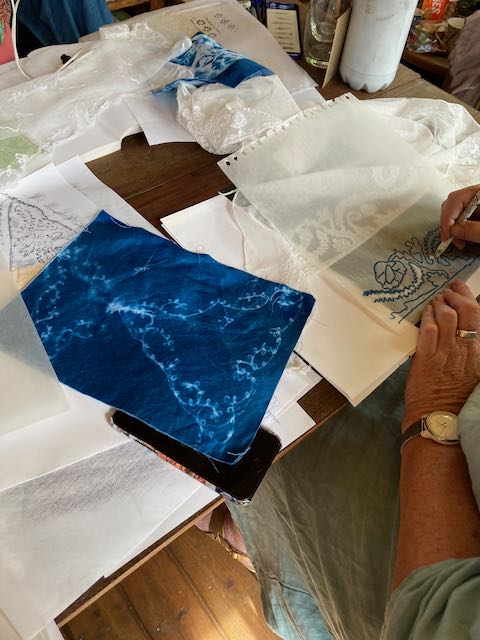

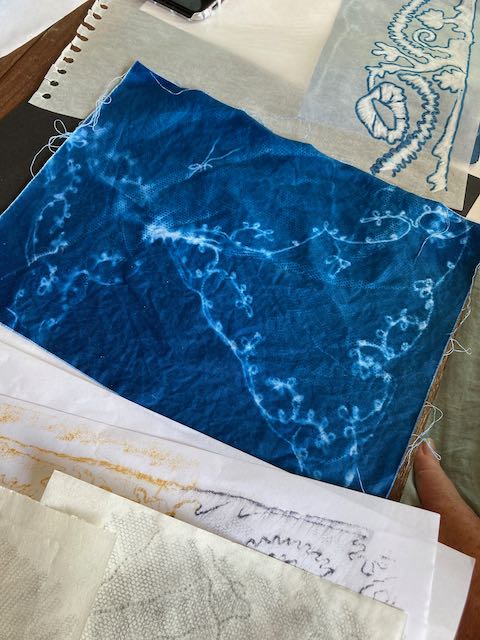
Over the weekend I ran my first in-person workshop in my garden studio! It’s was a bit of a squeeze with the exhibition on at the same time and lots of materials but we had a great time. The workshop was a chance to try some of the techniques I used for recording family textiles for my recent piece Imprint (images below).
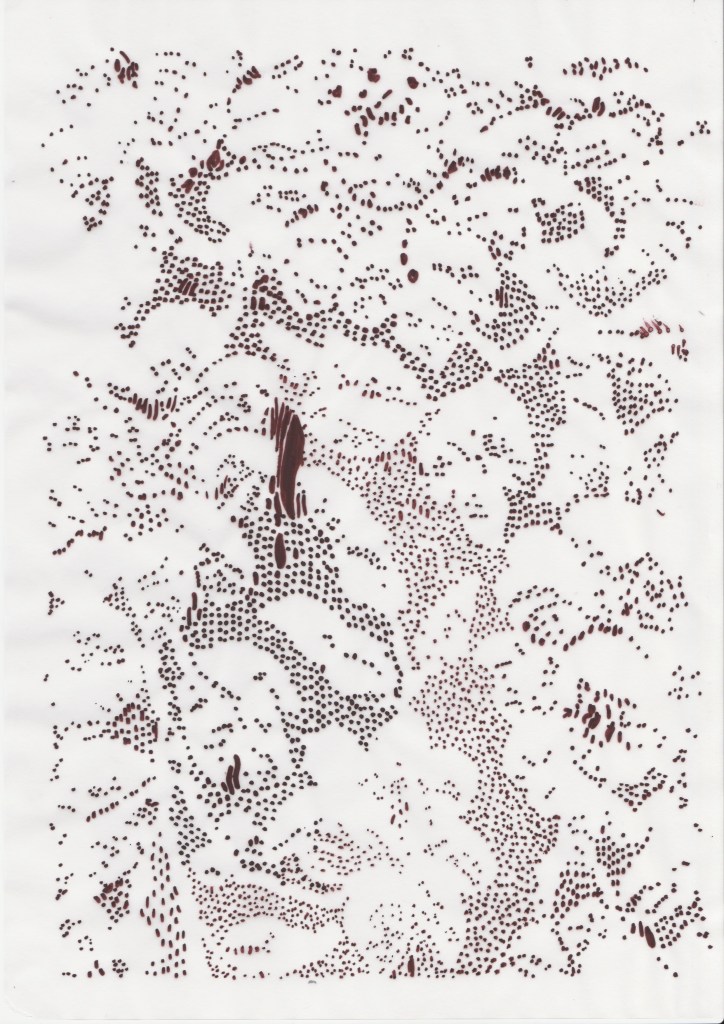


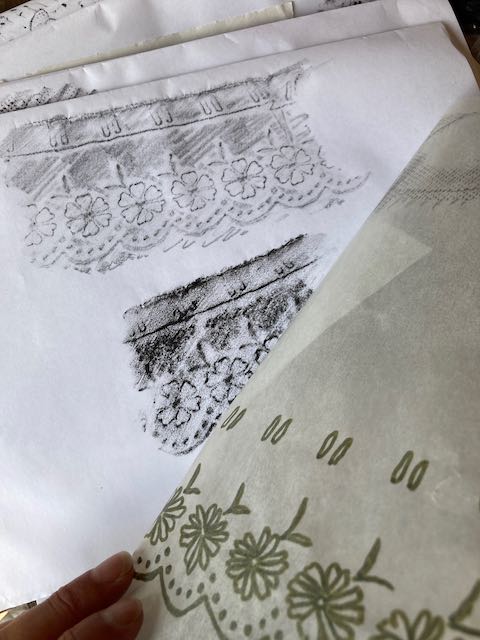
We spent time exploring the archive of textiles which inspired the work, and discussed the subtleties of meaning and connection created through making the series of artworks. We then tried out some of the techniques including cyanotype on paper, drawing with glassine paper, lightbox photography and digital manipulation and making rubbings with fine paper and graphite.
The participants created some really beautiful pieces which have sparked their ideas on how to use their own precious textiles collections to create meaningful and personal artwork. Thank you to Eva, Claire, Pam and Jo for being so creative and enthusiastic about these techniques and sharing your own stories and textiles, and to Jan for donating this wonderful collection and supporting the creation of Imprint.


I want to share this creative process with more people as I know that many of you will have textile collections that you don’t want to cut up but don’t know what to do with. I have loved making this archive of an archive and giving new life to the collection donated to me, and sharing this with others. I’m running an online version of the workshop in September which will be a live Zoom event (recording available afterwards). Obviously for this workshop you will need to have your own textiles to work from and supply the materials yourself but the workshop will give you masses of ideas of how to create unique artworks from your textile collection and preserve stories in an unique way.
All the techniques I’m sharing are ‘non-invasive’ meaning they don’t involve any damage or cutting the original pieces you are inspired by. We’ll start with spending some time thinking about the precious pieces you want to work with and what stories you want to draw out of them. I’ll demonstrate some techniques and ideas for you to experiment with at home using your own textiles and materials. There’s a suggested material list in the workshop but there’s nothing really expensive or hard to get and you can always watch the video back again once you have assembled all the materials you want to use. We’ll look at taking rubbings from textured fabrics, simple drawings of elements of the textiles, using paper, scissors and knives to create cut-work, I’ll demonstrate using cyanotype papers and fabrics and also look at stitching into paper and photographs. I’ll also talk about using photography and digital print to record your family textiles and share some tips for making this really powerful and personal.
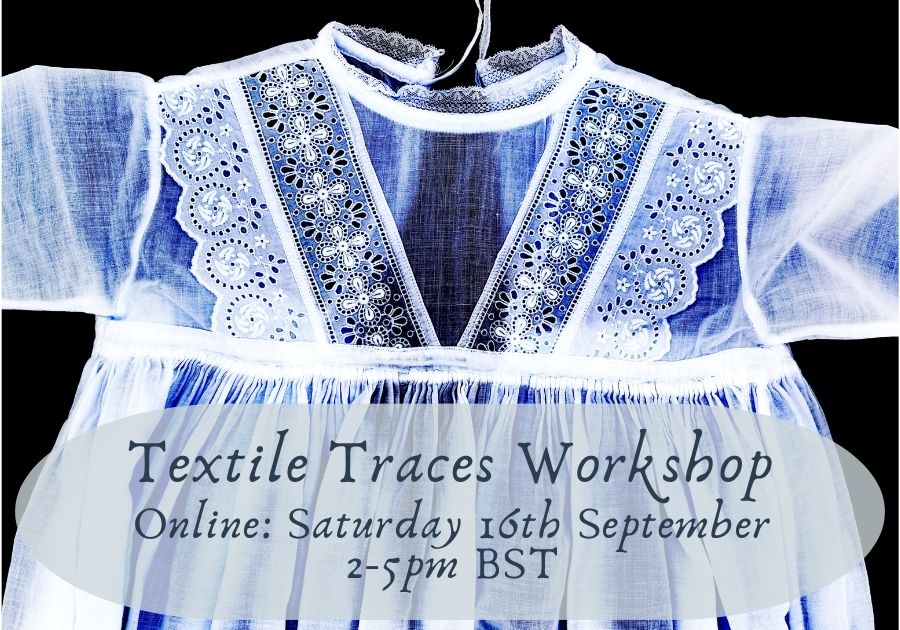
Textile Traces online workshop
In this workshop we will begin with thinking about the importance of the stories embedded within the textiles and what we most want to capture with our work. We’ll learn processes that don’t harm the textiles like taking rubbings, making line drawings , use a variety of materials for tracing details, cut work, Cyanotype and use a light box to capture details with photography. I’ll also share digital techniques and image manipulation.
Saturday 16th September 2-5pm BST
The online workshop is £35 and you can book it here.
You can also book the workshop and Cultures of Care talk for £40, saving £3 by using this link.

Textile Study Space is an online home for all the masses of textile techniques, making and study of historical textiles that I have amassed over the last two decades. I share posts about my work and how I’ve made it, techniques and ideas of how to use them in your own creative work, about materials and about the historical textiles that inspire and fascinate me. The Textile Study Space is like being in my studio and having the chance to look around at the boxes of samples and projects, textile collections and my work-in-progress. You’ll find stitch and quilting, historic embroidery, printing and appliqué and masses more. It’s just £5 a month to join.

 Ruth Singer
Let me know what you think